ASX Glossary - M: Difference between revisions
Jump to navigation
Jump to search
No edit summary |
No edit summary |
||
| Line 148: | Line 148: | ||
</head> | </head> | ||
<body> | <body> | ||
<table> | |||
<tr | <tr> | ||
<td class="term | <td class="term"> | ||
<a href="https://wiki.alsresume.com/index.php?title= | <a href="https://wiki.alsresume.com/index.php?title=Mach_number" target="_blank" | ||
style="color: #40E0D0; font-weight: bold; text-decoration: none; cursor: pointer;" | style="color: #40E0D0; font-weight: bold; text-decoration: none; cursor: pointer;" | ||
onmouseover="this.style.color='#ff4f01';" | onmouseover="this.style.color='#ff4f01';" | ||
onmouseout="this.style.color='#40E0D0';"> | onmouseout="this.style.color='#40E0D0';">Mach Number</a> | ||
</td> | |||
<td class="description">Mach number is the ratio of an aircraft’s speed to the speed of sound in the surrounding medium. For example, Mach 1 represents the speed of sound, while Mach 2 is twice the speed of sound. It is a critical measurement for supersonic and hypersonic flight.</td> | |||
<td class="image-column"><img src="https://www.alsresume.com/wp-content/uploads/2025/02/Mach-Number.jpg" alt="Mach Number"></td> | |||
<td class="description"> | |||
<td class="image-column"> | |||
</tr> | </tr> | ||
<tr | |||
<td class="term | <tr> | ||
<a href="https://wiki.alsresume.com/index.php?title= | <td class="term"> | ||
<a href="https://wiki.alsresume.com/index.php?title=Compass" target="_blank" | |||
style="color: #40E0D0; font-weight: bold; text-decoration: none; cursor: pointer;" | style="color: #40E0D0; font-weight: bold; text-decoration: none; cursor: pointer;" | ||
onmouseover="this.style.color='#ff4f01';" | onmouseover="this.style.color='#ff4f01';" | ||
onmouseout="this.style.color='#40E0D0';"> | onmouseout="this.style.color='#40E0D0';">Magnetic Compass</a> | ||
</td> | |||
<td class="description">A magnetic compass is a basic navigation instrument that displays the aircraft's heading relative to Earth’s magnetic poles. It operates without external power, providing a reliable backup to advanced avionics in case of system failures.</td> | |||
<td class="image-column"><img src="https://www.alsresume.com/wp-content/uploads/2025/02/Magnetic-Compass.jpg" alt="Magnetic Compass"></td> | |||
<td class="description"> | |||
<td class="image-column"> | |||
</tr> | </tr> | ||
<tr | <tr> | ||
<td class="term"> | <td class="term"> | ||
<a href="https://wiki.alsresume.com/index.php?title= | <a href="https://wiki.alsresume.com/index.php?title=Magnetic_declination" target="_blank" | ||
style="color: #40E0D0; font-weight: bold; text-decoration: none; cursor: pointer;" | style="color: #40E0D0; font-weight: bold; text-decoration: none; cursor: pointer;" | ||
onmouseover="this.style.color='#ff4f01';" | onmouseover="this.style.color='#ff4f01';" | ||
onmouseout="this.style.color='#40E0D0';"> | onmouseout="this.style.color='#40E0D0';">Magnetic Declination</a> | ||
</td> | |||
<td class="description">Magnetic declination is the angular difference between true north and magnetic north. It affects compass readings, requiring pilots to adjust navigation calculations to ensure accurate headings and routes.</td> | |||
<td class="image-column"><img src="https://www.alsresume.com/wp-content/uploads/2025/02/Magnetic-Declination.jpg" alt="Magnetic Declination"></td> | |||
<td class="description"> | |||
<td class="image-column"> | |||
</tr> | </tr> | ||
<tr | <tr> | ||
<td class="term"> | <td class="term"> | ||
<a href="https://wiki.alsresume.com/index.php?title= | <a href="https://wiki.alsresume.com/index.php?title=Heading_(navigation)" target="_blank" | ||
style="color: #40E0D0; font-weight: bold; text-decoration: none; cursor: pointer;" | style="color: #40E0D0; font-weight: bold; text-decoration: none; cursor: pointer;" | ||
onmouseover="this.style.color='#ff4f01';" | onmouseover="this.style.color='#ff4f01';" | ||
onmouseout="this.style.color='#40E0D0';"> | onmouseout="this.style.color='#40E0D0';">Magnetic Heading</a> | ||
</td> | |||
<td class="description">Magnetic heading is the direction an aircraft’s nose points, measured relative to magnetic north. Pilots use magnetic heading for navigation, adjusting for wind drift to maintain course.</td> | |||
<td class="image-column"><img src="https://www.alsresume.com/wp-content/uploads/2025/03/Magnetic.jpg" alt="Magnetic Heading"></td> | |||
<td class="description"> | |||
<td class="image-column"> | |||
</tr> | </tr> | ||
<tr | <tr> | ||
<td class="term"> | <td class="term"> | ||
<a href="https://wiki.alsresume.com/index.php?title= | <a href="https://wiki.alsresume.com/index.php?title=Magneto" target="_blank" | ||
style="color: #40E0D0; font-weight: bold; text-decoration: none; cursor: pointer;" | style="color: #40E0D0; font-weight: bold; text-decoration: none; cursor: pointer;" | ||
onmouseover="this.style.color='#ff4f01';" | onmouseover="this.style.color='#ff4f01';" | ||
onmouseout="this.style.color='#40E0D0';"> | onmouseout="this.style.color='#40E0D0';">Magneto</a> | ||
</td> | |||
<td class="description">A magneto is an electrical generator in piston-engine aircraft that produces high-voltage current for the spark plugs, ensuring ignition of the fuel-air mixture in the engine. It operates independently of the aircraft’s electrical system.</td> | |||
<td class="image-column"><img src="https://www.alsresume.com/wp-content/uploads/2025/02/Magneto2.jpg" alt="Magneto"></td> | |||
<td class="description"> | |||
<td class="image-column"> | |||
</tr> | </tr> | ||
<tr | <tr> | ||
<td class="term"> | <td class="term"> | ||
<a href="https://wiki.alsresume.com/index.php?title= | <a href="https://wiki.alsresume.com/index.php?title=Landing_gear" target="_blank" | ||
style="color: #40E0D0; font-weight: bold; text-decoration: none; cursor: pointer;" | style="color: #40E0D0; font-weight: bold; text-decoration: none; cursor: pointer;" | ||
onmouseover="this.style.color='#ff4f01';" | onmouseover="this.style.color='#ff4f01';" | ||
onmouseout="this.style.color='#40E0D0';"> | onmouseout="this.style.color='#40E0D0';">Main Landing Gear</a> | ||
</td> | |||
<td class="description">The main landing gear supports the majority of an aircraft’s weight during ground operations, takeoff, and landing. It typically includes wheels, brakes, and shock absorbers to ensure smooth ground handling and effective braking.</td> | |||
<td class="image-column"><img src="https://www.alsresume.com/wp-content/uploads/2025/02/Main-Landing-gear.jpg" alt="Main Landing Gear"></td> | |||
<td class="description"> | |||
<td class="image-column"> | |||
</tr> | </tr> | ||
<tr | <tr> | ||
<td class="term"> | <td class="term"> | ||
<a href="https://wiki.alsresume.com/index.php?title= | <a href="https://wiki.alsresume.com/index.php?title=Aircraft_Maintenance_Manual_(AMM)" target="_blank" | ||
style="color: #40E0D0; font-weight: bold; text-decoration: none; cursor: pointer;" | style="color: #40E0D0; font-weight: bold; text-decoration: none; cursor: pointer;" | ||
onmouseover="this.style.color='#ff4f01';" | onmouseover="this.style.color='#ff4f01';" | ||
onmouseout="this.style.color='#40E0D0';"> | onmouseout="this.style.color='#40E0D0';">Maintenance Manual</a> | ||
</td> | |||
<td class="description">An aircraft maintenance manual provides detailed instructions for inspecting, repairing, and maintaining the aircraft. It is a crucial document for mechanics and engineers, ensuring compliance with safety and regulatory standards.</td> | |||
<td class="image-column"><img src="https://www.alsresume.com/wp-content/uploads/2025/02/Piper.jpg" alt="Maintenance Manual"></td> | |||
<td class="description"> | |||
<td class="image-column"> | |||
</tr> | </tr> | ||
<tr | <tr> | ||
<td class="term"> | <td class="term"> | ||
<a href="https://wiki.alsresume.com/index.php?title= | <a href="https://wiki.alsresume.com/index.php?title=Manifold_Pressure" target="_blank" | ||
style="color: #40E0D0; font-weight: bold; text-decoration: none; cursor: pointer;" | style="color: #40E0D0; font-weight: bold; text-decoration: none; cursor: pointer;" | ||
onmouseover="this.style.color='#ff4f01';" | onmouseover="this.style.color='#ff4f01';" | ||
onmouseout="this.style.color='#40E0D0';"> | onmouseout="this.style.color='#40E0D0';">Manifold Pressure</a> | ||
</td> | |||
<td class="description">Manifold pressure measures the air-fuel mixture pressure within an aircraft engine’s intake manifold. It helps pilots manage engine power, especially in turbocharged or supercharged piston engines.</td> | |||
<td class="image-column"><img src="https://www.alsresume.com/wp-content/uploads/2025/02/manifold-pr.jpg" alt="Manifold Pressure"></td> | |||
<td class="description"> | |||
<td class="image-column"> | |||
</tr> | </tr> | ||
<tr> | <tr> | ||
<td class="term"> | <td class="term"> | ||
<a href="https://wiki.alsresume.com/index.php?title= | <a href="https://wiki.alsresume.com/index.php?title=Marker_beacon" target="_blank" | ||
style="color: #40E0D0; font-weight: bold; text-decoration: none; cursor: pointer;" | style="color: #40E0D0; font-weight: bold; text-decoration: none; cursor: pointer;" | ||
onmouseover="this.style.color='#ff4f01';" | onmouseover="this.style.color='#ff4f01';" | ||
onmouseout="this.style.color='#40E0D0';"> | onmouseout="this.style.color='#40E0D0';">Marker Beacons</a> | ||
</td> | |||
<td class="description">Marker beacons are radio transmitters used in Instrument Landing Systems (ILS) to provide distance guidance during approach. They emit audio tones and cockpit indicators to alert pilots when passing specific points.</td> | |||
<td class="description"> | <td class="image-column"><img src="https://www.alsresume.com/wp-content/uploads/2025/02/Marker-beacons.jpg" alt="Marker Beacons"></td> | ||
<td class="image-column"><img src="https://www.alsresume.com/wp-content/uploads/2025/02/ | |||
</tr> | </tr> | ||
<tr | <tr> | ||
<td class="term"> | <td class="term"> | ||
<a href="https://wiki.alsresume.com/index.php?title= | <a href="https://wiki.alsresume.com/index.php?title=Mass_flow_rate" target="_blank" | ||
style="color: #40E0D0; font-weight: bold; text-decoration: none; cursor: pointer;" | style="color: #40E0D0; font-weight: bold; text-decoration: none; cursor: pointer;" | ||
onmouseover="this.style.color='#ff4f01';" | onmouseover="this.style.color='#ff4f01';" | ||
onmouseout="this.style.color='#40E0D0';"> | onmouseout="this.style.color='#40E0D0';">Mass Flow Rate</a> | ||
</td> | |||
<td class="description">Mass flow rate refers to the amount of air or fuel passing through an aircraft engine per unit of time. It is critical for calculating engine performance, efficiency, and thrust.</td> | |||
<td class="image-column"><img src="https://www.alsresume.com/wp-content/uploads/2025/03/Mass-Flow.jpg" alt="Mass Flow Rate"></td> | |||
<td class="description"> | |||
<td class="image-column"> | |||
</tr> | </tr> | ||
<tr | <tr> | ||
<td class="term"> | <td class="term"> | ||
<a href="https://wiki.alsresume.com/index.php?title= | <a href="https://wiki.alsresume.com/index.php?title=Annunciator_panel" target="_blank" | ||
style="color: #40E0D0; font-weight: bold; text-decoration: none; cursor: pointer;" | style="color: #40E0D0; font-weight: bold; text-decoration: none; cursor: pointer;" | ||
onmouseover="this.style.color='#ff4f01';" | onmouseover="this.style.color='#ff4f01';" | ||
onmouseout="this.style.color='#40E0D0';"> | onmouseout="this.style.color='#40E0D0';">Master Caution</a> | ||
</td> | |||
<td class="description">The master caution is an alert system in the cockpit that signals non-critical system failures or warnings. Pilots must review specific indicators to diagnose and address the issue.</td> | |||
<td class="image-column"><img src="https://www.alsresume.com/wp-content/uploads/2025/03/Master-Caution.jpg" alt="Master Caution"></td> | |||
<td class="description"> | |||
<td class="image-column"> | |||
</tr> | </tr> | ||
<tr | <tr> | ||
<td class="term"> | <td class="term"> | ||
<a href="https://wiki.alsresume.com/index.php?title= | <a href="https://wiki.alsresume.com/index.php?title=Maximum_takeoff_weight" target="_blank" | ||
style="color: #40E0D0; font-weight: bold; text-decoration: none; cursor: pointer;" | style="color: #40E0D0; font-weight: bold; text-decoration: none; cursor: pointer;" | ||
onmouseover="this.style.color='#ff4f01';" | onmouseover="this.style.color='#ff4f01';" | ||
onmouseout="this.style.color='#40E0D0';"> | onmouseout="this.style.color='#40E0D0';">Maximum Takeoff Weight (MTOW)</a> | ||
</td> | |||
<td class="description">MTOW is the highest weight at which an aircraft is certified for takeoff. It includes fuel, passengers, cargo, and crew, and exceeding this limit can compromise safety and performance.</td> | |||
<td class="image-column"><img src="https://www.alsresume.com/wp-content/uploads/2025/03/MTOW.jpg" alt="Maximum Takeoff Weight (MTOW)"></td> | |||
<td class="description"> | |||
<td class="image-column"> | |||
</tr> | </tr> | ||
<tr id=" | <tr id="medlin-mailbox"> | ||
<td class="term"> | <td class="term"> | ||
<a href="https://wiki.alsresume.com/index.php?title= | <a href="https://wiki.alsresume.com/index.php?title=Steve_Medlin" target="_blank" | ||
style="color: #40E0D0; font-weight: bold; text-decoration: none; cursor: pointer;" | style="color: #40E0D0; font-weight: bold; text-decoration: none; cursor: pointer;" | ||
onmouseover="this.style.color='#ff4f01';" | onmouseover="this.style.color='#ff4f01';" | ||
onmouseout="this.style.color='#40E0D0';"> | onmouseout="this.style.color='#40E0D0';">Medlin Mailbox</a> | ||
</td> | |||
<td class="description"> | <td class="description"> | ||
The Medlin Mailbox (<span style="color: #00ff01; font-weight: bold; text-decoration: none; cursor: pointer;" | |||
onmouseover="this.style.color='#ff4f01';" | |||
onmouseout="this.style.color='#00ff01';" | |||
onclick="window.open('https://www.google.com/maps/place/37%C2%B027%2725%22N+115%C2%B028%2757%22W/@37.456944,-115.482500,17z', '_blank')">37°27'25"N 115°28'57"W</span>) once a black mailbox near Mailbox Road, gained fame due to UFO enthusiasts associating it with Area 51. Rancher Steve Medlin used it for personal mail, but vandalism and constant tampering led him to replace it with a locked white mailbox. Despite misconceptions, it had no actual connection to Area 51. Due to continued damage, Medlin removed it permanently. | |||
</td> | </td> | ||
<td class="image-column"><img src="https://www.alsresume.com/wp-content/uploads/2025/03/Medlin-mailbox.jpg" alt="Medlin Mailbox"></td> | |||
</tr> | </tr> | ||
<tr | <tr> | ||
<td class="term"> | <td class="term"> | ||
<a href="https:// | <a href="https://wiki.alsresume.com/index.php?title=METAR" target="_blank" | ||
style="color: #40E0D0; font-weight: bold; text-decoration: none; cursor: pointer;" | style="color: #40E0D0; font-weight: bold; text-decoration: none; cursor: pointer;" | ||
onmouseover="this.style.color='#ff4f01';" | onmouseover="this.style.color='#ff4f01';" | ||
onmouseout="this.style.color='#40E0D0';"> | onmouseout="this.style.color='#40E0D0';">METAR (Meteorological Aerodrome Report)</a> | ||
</td> | |||
<td class="description">METAR is a coded format for reporting current weather conditions at an airport. It provides vital information for pilots, including visibility, wind speed, temperature, and runway conditions.</td> | |||
<td class="image-column"><img src="https://www.alsresume.com/wp-content/uploads/2025/03/METAR.jpg" alt="METAR (Meteorological Aerodrome Report)"></td> | |||
<td class="description"> | |||
<td class="image-column"> | |||
</tr> | </tr> | ||
<tr | <tr> | ||
<td class="term"> | <td class="term"> | ||
<a href="https://wiki.alsresume.com/index.php?title= | <a href="https://wiki.alsresume.com/index.php?title=Microwave_landing_system" target="_blank" | ||
style="color: #40E0D0; font-weight: bold; text-decoration: none; cursor: pointer;" | style="color: #40E0D0; font-weight: bold; text-decoration: none; cursor: pointer;" | ||
onmouseover="this.style.color='#ff4f01';" | onmouseover="this.style.color='#ff4f01';" | ||
onmouseout="this.style.color='#40E0D0';"> | onmouseout="this.style.color='#40E0D0';">Microwave Landing System (MLS)</a> | ||
</td> | |||
<td class="description">MLS is a precision landing aid that uses microwave signals to provide accurate lateral and vertical guidance. It enhances landing safety in low-visibility conditions, especially at busy airports.</td> | |||
<td class="image-column"><img src="https://www.alsresume.com/wp-content/uploads/2025/03/Microwave.jpg" alt="Microwave Landing System (MLS)"></td> | |||
<td class="description"> | |||
<td class="image-column"> | |||
</tr> | </tr> | ||
<tr | <tr> | ||
<td class="term"> | <td class="term"> | ||
<a href="https://wiki.alsresume.com/index.php?title= | <a href="https://wiki.alsresume.com/index.php?title=Military_operations_area" target="_blank" | ||
style="color: #40E0D0; font-weight: bold; text-decoration: none; cursor: pointer;" | style="color: #40E0D0; font-weight: bold; text-decoration: none; cursor: pointer;" | ||
onmouseover="this.style.color='#ff4f01';" | onmouseover="this.style.color='#ff4f01';" | ||
onmouseout="this.style.color='#40E0D0';"> | onmouseout="this.style.color='#40E0D0';">Military Operations Area (MOA)</a> | ||
</td> | |||
<td class="description">An MOA is a designated airspace where military training and operations occur. Pilots must check NOTAMs and coordinate with air traffic control to avoid entering active MOAs.</td> | |||
<td class="image-column"><img src="https://www.alsresume.com/wp-content/uploads/2025/03/MOA.jpg" alt="Military Operations Area (MOA)"></td> | |||
<td class="description"> | |||
<td class="image-column"> | |||
</tr> | </tr> | ||
<tr | <tr> | ||
<td class="term"> | <td class="term"> | ||
<a href="https://wiki.alsresume.com/index.php?title= | <a href="https://wiki.alsresume.com/index.php?title=Instrument_approach" target="_blank" | ||
style="color: #40E0D0; font-weight: bold; text-decoration: none; cursor: pointer;" | style="color: #40E0D0; font-weight: bold; text-decoration: none; cursor: pointer;" | ||
onmouseover="this.style.color='#ff4f01';" | onmouseover="this.style.color='#ff4f01';" | ||
onmouseout="this.style.color='#40E0D0';"> | onmouseout="this.style.color='#40E0D0';">Minimum Descent Altitude (MDA)</a> | ||
</td> | |||
<td class="description">MDA is the lowest altitude a pilot can descend to during a non-precision instrument approach without visual contact with the runway or surrounding terrain.</td> | |||
<td class="image-column"><img src="https://www.alsresume.com/wp-content/uploads/2025/03/MDA.jpg" alt="Minimum Descent Altitude (MDA)"></td> | |||
<td class="description"> | |||
<td class="image-column"> | |||
</tr> | </tr> | ||
<tr | <tr> | ||
<td class="term"> | <td class="term"> | ||
<a href="https://wiki.alsresume.com/index.php?title= | <a href="https://wiki.alsresume.com/index.php?title=Minimum_Equipment_List_(MEL)" target="_blank" | ||
style="color: #40E0D0; font-weight: bold; text-decoration: none; cursor: pointer;" | style="color: #40E0D0; font-weight: bold; text-decoration: none; cursor: pointer;" | ||
onmouseover="this.style.color='#ff4f01';" | onmouseover="this.style.color='#ff4f01';" | ||
onmouseout="this.style.color='#40E0D0';"> | onmouseout="this.style.color='#40E0D0';">Minimum Equipment List (MEL)</a> | ||
</td> | |||
<td class="description">The MEL is a document that outlines equipment that can be inoperative while the aircraft remains airworthy. It ensures operational safety despite minor system failures.</td> | |||
<td class="image-column"><img src="https://www.alsresume.com/wp-content/uploads/2025/03/MEL.jpg" alt="Minimum Equipment List (MEL)"></td> | |||
<td class="description"> | |||
<td class="image-column"> | |||
</tr> | </tr> | ||
<tr | <tr> | ||
<td class="term"> | <td class="term"> | ||
<a href="https://wiki.alsresume.com/index.php?title= | <a href="https://wiki.alsresume.com/index.php?title=Minimum_Fuel" target="_blank" | ||
style="color: #40E0D0; font-weight: bold; text-decoration: none; cursor: pointer;" | style="color: #40E0D0; font-weight: bold; text-decoration: none; cursor: pointer;" | ||
onmouseover="this.style.color='#ff4f01';" | onmouseover="this.style.color='#ff4f01';" | ||
onmouseout="this.style.color='#40E0D0';"> | onmouseout="this.style.color='#40E0D0';">Minimum Fuel</a> | ||
</td> | |||
<td class="description">Minimum fuel is a term used by pilots to declare that fuel levels are sufficient for the flight but do not allow for significant delays or diversions without impacting safety margins.</td> | |||
<td class="image-column"><img src="https://www.alsresume.com/wp-content/uploads/2025/03/Minimum-Fuel.jpg" alt="Minimum Fuel"></td> | |||
<td class="description"> | |||
<td class="image-column"> | |||
</tr> | </tr> | ||
<tr | <tr> | ||
<td class="term"> | <td class="term"> | ||
<a href="https://wiki.alsresume.com/index.php?title= | <a href="https://wiki.alsresume.com/index.php?title=Missed_approach" target="_blank" | ||
style="color: #40E0D0; font-weight: bold; text-decoration: none; cursor: pointer;" | style="color: #40E0D0; font-weight: bold; text-decoration: none; cursor: pointer;" | ||
onmouseover="this.style.color='#ff4f01';" | onmouseover="this.style.color='#ff4f01';" | ||
onmouseout="this.style.color='#40E0D0';"> | onmouseout="this.style.color='#40E0D0';">Missed Approach Procedure (MAP)</a> | ||
</td> | |||
<td class="description">The MAP is a set of instructions followed when a landing cannot be completed safely. It includes specific altitudes, headings, and waypoints to ensure a controlled return to the holding pattern or alternate approach.</td> | |||
<td class="image-column"><img src="https://www.alsresume.com/wp-content/uploads/2025/03/MAP.jpg" alt="Missed Approach Procedure (MAP)"></td> | |||
<td class="description"> | |||
<td class="image-column"> | |||
</tr> | </tr> | ||
<tr | <tr> | ||
<td class="term"> | <td class="term"> | ||
<a href="https://wiki.alsresume.com/index.php?title= | <a href="https://wiki.alsresume.com/index.php?title=Transponder_(aeronautics)" target="_blank" | ||
style="color: # | style="color: #40E0D0; font-weight: bold; text-decoration: none; cursor: pointer;" | ||
onmouseover="this.style.color='#ff4f01';" | onmouseover="this.style.color='#ff4f01';" | ||
onmouseout="this.style.color='# | onmouseout="this.style.color='#40E0D0';">Mode C Transponder</a> | ||
</td> | |||
<td class="description">A Mode C transponder transmits altitude data along with the aircraft's identification to air traffic control, enhancing situational awareness and collision avoidance.</td> | |||
<td class="image-column"><img src="https://www.alsresume.com/wp-content/uploads/2025/03/Transponder.jpg" alt="Mode C Transponder"></td> | |||
<td class="description"> | |||
<td class="image-column"> | |||
</tr> | </tr> | ||
<tr | <tr> | ||
<td class="term"> | <td class="term"> | ||
<a href="https://wiki.alsresume.com/index.php?title= | <a href="https://wiki.alsresume.com/index.php?title=Mode_control_panel" target="_blank" | ||
style="color: #40E0D0; font-weight: bold; text-decoration: none; cursor: pointer;" | style="color: #40E0D0; font-weight: bold; text-decoration: none; cursor: pointer;" | ||
onmouseover="this.style.color='#ff4f01';" | onmouseover="this.style.color='#ff4f01';" | ||
onmouseout="this.style.color='#40E0D0';"> | onmouseout="this.style.color='#40E0D0';">Mode Control Panel (MCP)</a> | ||
</td> | |||
<td class="description">The MCP is an autopilot interface in modern aircraft that allows pilots to set altitudes, speeds, headings, and navigation modes. It simplifies flight management and ensures precision in automated operations.</td> | |||
<td class="image-column"><img src="https://www.alsresume.com/wp-content/uploads/2025/03/Mode-Control-Panel.jpg" alt="Mode Control Panel (MCP)"></td> | |||
<td class="description"> | |||
<td class="image-column"> | |||
</tr> | </tr> | ||
<tr | <tr> | ||
<td class="term"> | <td class="term"> | ||
<a href="https://wiki.alsresume.com/index.php?title= | <a href="https://wiki.alsresume.com/index.php?title=Transponder#Aviation" target="_blank" | ||
style="color: #40E0D0; font-weight: bold; text-decoration: none; cursor: pointer;" | style="color: #40E0D0; font-weight: bold; text-decoration: none; cursor: pointer;" | ||
onmouseover="this.style.color='#ff4f01';" | onmouseover="this.style.color='#ff4f01';" | ||
onmouseout="this.style.color='#40E0D0';"> | onmouseout="this.style.color='#40E0D0';">Mode S Transponder</a> | ||
</td> | |||
<td class="description">Mode S transponders provide enhanced data exchange with air traffic control, including aircraft identification, altitude, and additional flight information for modern traffic management systems.</td> | |||
<td class="image-column"><img src="https://www.alsresume.com/wp-content/uploads/2025/03/Mode-S-Transponder.jpg" alt="Mode S Transponder"></td> | |||
<td class="description"> | |||
<td class="image-column"> | |||
</tr> | </tr> | ||
<tr | <tr> | ||
<td class="term"> | <td class="term"> | ||
<a href="https://wiki.alsresume.com/index.php?title= | <a href="https://wiki.alsresume.com/index.php?title=Montreal_Convention" target="_blank" | ||
style="color: #40E0D0; font-weight: bold; text-decoration: none; cursor: pointer;" | style="color: #40E0D0; font-weight: bold; text-decoration: none; cursor: pointer;" | ||
onmouseover="this.style.color='#ff4f01';" | onmouseover="this.style.color='#ff4f01';" | ||
onmouseout="this.style.color='#40E0D0';"> | onmouseout="this.style.color='#40E0D0';">Montreal Convention</td> | ||
<td class="description">The Montreal Convention is an international treaty that establishes airline liability for passengers, baggage, and cargo. It standardizes compensation rules and promotes fair treatment in international air travel.</td> | |||
<td class="image-column"><img src="https://www.alsresume.com/wp-content/uploads/2025/03/Montreal-Convention.jpg" alt="Montreal Convention"></td> | |||
<td class="description"> | |||
<td class="image-column"> | |||
</tr> | </tr> | ||
<tr> | |||
<td class="term"> | <td class="term"> | ||
<a href="https://wiki.alsresume.com/index.php?title= | <a href="https://wiki.alsresume.com/index.php?title=Mountain_Wave_Turbulence" target="_blank" | ||
style="color: #40E0D0; font-weight: bold; text-decoration: none; cursor: pointer;" | style="color: #40E0D0; font-weight: bold; text-decoration: none; cursor: pointer;" | ||
onmouseover="this.style.color='#ff4f01';" | onmouseover="this.style.color='#ff4f01';" | ||
onmouseout="this.style.color='#40E0D0';"> | onmouseout="this.style.color='#40E0D0';">Mountain Wave Turbulence</a> | ||
</td> | |||
<td class="description">Mountain wave turbulence occurs when airflow over mountainous terrain creates oscillating wind patterns. It can lead to severe turbulence, requiring pilots to adjust altitude and airspeed for safety.</td> | |||
<td class="image-column"><img src="https://www.alsresume.com/wp-content/uploads/2025/03/Mountain-Wave.jpg" alt="Mountain Wave Turbulence"></td> | |||
<td class="description"> | |||
<td class="image-column"> | |||
</tr> | </tr> | ||
<tr id=" | <tr id="mount-weather"> | ||
<td class="term"> | <td class="term"> | ||
<a href="https://wiki.alsresume.com/index.php?title= | <a href="https://wiki.alsresume.com/index.php?title=Mount_Weather_Emergency_Operations_Center" target="_blank" | ||
style="color: #40E0D0; font-weight: bold; text-decoration: none; cursor: pointer;" | style="color: #40E0D0; font-weight: bold; text-decoration: none; cursor: pointer;" | ||
onmouseover="this.style.color='#ff4f01';" | onmouseover="this.style.color='#ff4f01';" | ||
onmouseout="this.style.color='#40E0D0';"> | onmouseout="this.style.color='#40E0D0';">Mount Weather</a> | ||
</td> | |||
<td class="description"> | <td class="description"> | ||
The Mount Weather Emergency Operations Center (<span style="color: #00ff01; font-weight: bold; text-decoration: none; cursor: pointer;" | |||
onmouseover="this.style.color='#ff4f01';" | |||
onmouseout="this.style.color='#00ff01';" | |||
onclick="window.open('https://www.google.com/maps/@39.063233,-77.887822,15z/data=!3m1!1e3', '_blank')">N39°03'47.64" W77°53'16.16"</span>) is a top-secret U.S. government bunker in Virginia, designed for continuity of government during national emergencies. Operated by FEMA, it houses critical infrastructure, communications systems, and facilities for key officials. Established during the Cold War, it remains active today as a secure command center for disaster response, crisis coordination, and national security operations. | |||
</td> | </td> | ||
<td class="image-column"><img src="https://www.alsresume.com/wp-content/uploads/2025/03/Mount-Weather.jpg" alt="Mount Weather"></td> | |||
</tr> | </tr> | ||
<td class="term"> | <td class="term"> | ||
<a href="https://wiki.alsresume.com/index.php?title= | <a href="https://wiki.alsresume.com/index.php?title=Muffler_(Aircraft_Engine)" target="_blank" | ||
style="color: #40E0D0; font-weight: bold; text-decoration: none; cursor: pointer;" | style="color: #40E0D0; font-weight: bold; text-decoration: none; cursor: pointer;" | ||
onmouseover="this.style.color='#ff4f01';" | onmouseover="this.style.color='#ff4f01';" | ||
onmouseout="this.style.color='#40E0D0';"> | onmouseout="this.style.color='#40E0D0';">Muffler (Aircraft Engine)</a> | ||
</td> | |||
<td class="description">A muffler reduces exhaust noise in piston-engine aircraft. It helps comply with noise regulations while maintaining engine efficiency and performance.</td> | |||
<td class="image-column"><img src="https://www.alsresume.com/wp-content/uploads/2025/03/Muffler2.jpg" alt="Muffler (Aircraft Engine)"></td> | |||
<td class="description"> | |||
<td class="image-column"> | |||
</tr> | </tr> | ||
<tr | <tr> | ||
<td class="term"> | <td class="term"> | ||
<a href="https://wiki.alsresume.com/index.php?title= | <a href="https://wiki.alsresume.com/index.php?title=Multi-crew_cooperation" target="_blank" | ||
style="color: #40E0D0; font-weight: bold; text-decoration: none; cursor: pointer;" | style="color: #40E0D0; font-weight: bold; text-decoration: none; cursor: pointer;" | ||
onmouseover="this.style.color='#ff4f01';" | onmouseover="this.style.color='#ff4f01';" | ||
onmouseout="this.style.color='#40E0D0';"> | onmouseout="this.style.color='#40E0D0';">Multi-Crew Coordination (MCC)</a> | ||
</td> | |||
<td class="description">MCC is a training program for pilots to develop teamwork, communication, and decision-making skills in multi-crew flight operations, enhancing safety and efficiency in complex aircraft environments.</td> | |||
<td class="image-column"><img src="https://www.alsresume.com/wp-content/uploads/2025/03/Multi-Crew.jpg" alt="Multi-Crew Coordination (MCC)"></td> | |||
<td class="description"> | |||
<td class="image-column"> | |||
</tr> | </tr> | ||
<tr | <tr> | ||
<td class="term"> | <td class="term"> | ||
<a href="https://wiki.alsresume.com/index.php?title= | <a href="https://wiki.alsresume.com/index.php?title=Pilot_certification_in_the_United_States" target="_blank" | ||
style="color: #40E0D0; font-weight: bold; text-decoration: none; cursor: pointer;" | style="color: #40E0D0; font-weight: bold; text-decoration: none; cursor: pointer;" | ||
onmouseover="this.style.color='#ff4f01';" | onmouseover="this.style.color='#ff4f01';" | ||
onmouseout="this.style.color='#40E0D0';"> | onmouseout="this.style.color='#40E0D0';">Multi-Engine Rating</a> | ||
</td> | |||
<td class="description">A multi-engine rating is an additional certification for pilots allowing them to operate aircraft with more than one engine. It includes training on engine-out procedures and performance management.</td> | |||
<td class="image-column"><img src="https://www.alsresume.com/wp-content/uploads/2025/03/Multi-Engine-Rating.jpg" alt="Multi-Engine Rating"></td> | |||
<td class="description"> | |||
<td class="image-column"> | |||
</tr> | </tr> | ||
<tr | <tr> | ||
<td class="term"> | <td class="term"> | ||
<a href="https://wiki.alsresume.com/index.php?title= | <a href="https://wiki.alsresume.com/index.php?title=Multifunction_Display_(MFD)" target="_blank" | ||
style="color: #40E0D0; font-weight: bold; text-decoration: none; cursor: pointer;" | style="color: #40E0D0; font-weight: bold; text-decoration: none; cursor: pointer;" | ||
onmouseover="this.style.color='#ff4f01';" | onmouseover="this.style.color='#ff4f01';" | ||
onmouseout="this.style.color='#40E0D0';"> | onmouseout="this.style.color='#40E0D0';">Multifunction Display (MFD)</a> | ||
</td> | |||
<td class="description">An MFD is a digital screen in modern cockpits that displays navigation, weather, engine data, and flight parameters, reducing pilot workload and enhancing situational awareness.</td> | |||
<td class="image-column"><img src="https://www.alsresume.com/wp-content/uploads/2025/03/MFD.jpg" alt="Multifunction Display (MFD)"></td> | |||
<td class="description"> | |||
<td class="image-column"> | |||
</tr> | </tr> | ||
<tr | <tr> | ||
<td class="term"> | <td class="term"> | ||
<a href="https://wiki.alsresume.com/index.php?title= | <a href="https://wiki.alsresume.com/index.php?title=Municipal_Airport" target="_blank" | ||
style="color: #40E0D0; font-weight: bold; text-decoration: none; cursor: pointer;" | style="color: #40E0D0; font-weight: bold; text-decoration: none; cursor: pointer;" | ||
onmouseover="this.style.color='#ff4f01';" | onmouseover="this.style.color='#ff4f01';" | ||
onmouseout="this.style.color='#40E0D0';"> | onmouseout="this.style.color='#40E0D0';">Municipal Airport</a> | ||
</td> | |||
<td class="description">A municipal airport is owned and operated by a local government, serving general aviation, regional airlines, and community needs. These airports often provide training facilities and support for emergency services.</td> | |||
<td class="image-column"><img src="https://www.alsresume.com/wp-content/uploads/2025/03/Municipal-Airport.jpg" alt="Municipal Airport"></td> | |||
<td class="description"> | |||
<td class="image-column"> | |||
</tr> | </tr> | ||
<tr | <tr> | ||
<td class="term"> | <td class="term"> | ||
<a href="https://wiki.alsresume.com/index.php?title= | <a href="https://wiki.alsresume.com/index.php?title=Mylar_Insulation" target="_blank" | ||
style="color: #40E0D0; font-weight: bold; text-decoration: none; cursor: pointer;" | style="color: #40E0D0; font-weight: bold; text-decoration: none; cursor: pointer;" | ||
onmouseover="this.style.color='#ff4f01';" | onmouseover="this.style.color='#ff4f01';" | ||
onmouseout="this.style.color='#40E0D0';"> | onmouseout="this.style.color='#40E0D0';">Mylar Insulation</a> | ||
</td> | |||
<td class="description">Mylar insulation is a lightweight, heat-resistant material used in aircraft to protect electrical systems, reduce cabin noise, and improve thermal efficiency.</td> | |||
<td class="image-column"><img src="https://www.alsresume.com/wp-content/uploads/2025/03/Mylar.jpg" alt="Mylar Insulation"></td> | |||
<td class="description"> | |||
<td class="image-column"> | |||
</tr> | </tr> | ||
</table> | |||
</body> | </body> | ||
</html> | </html> | ||
Latest revision as of 18:20, 23 April 2025

| Click on term for full definition | Click here to report corrections and content addition requests |
| Mach Number | Mach number is the ratio of an aircraft’s speed to the speed of sound in the surrounding medium. For example, Mach 1 represents the speed of sound, while Mach 2 is twice the speed of sound. It is a critical measurement for supersonic and hypersonic flight. |  |
| Magnetic Compass | A magnetic compass is a basic navigation instrument that displays the aircraft's heading relative to Earth’s magnetic poles. It operates without external power, providing a reliable backup to advanced avionics in case of system failures. | 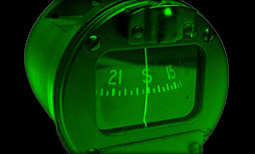 |
| Magnetic Declination | Magnetic declination is the angular difference between true north and magnetic north. It affects compass readings, requiring pilots to adjust navigation calculations to ensure accurate headings and routes. | 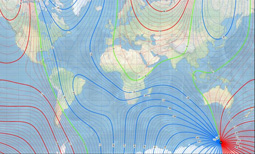 |
| Magnetic Heading | Magnetic heading is the direction an aircraft’s nose points, measured relative to magnetic north. Pilots use magnetic heading for navigation, adjusting for wind drift to maintain course. |  |
| Magneto | A magneto is an electrical generator in piston-engine aircraft that produces high-voltage current for the spark plugs, ensuring ignition of the fuel-air mixture in the engine. It operates independently of the aircraft’s electrical system. |  |
| Main Landing Gear | The main landing gear supports the majority of an aircraft’s weight during ground operations, takeoff, and landing. It typically includes wheels, brakes, and shock absorbers to ensure smooth ground handling and effective braking. |  |
| Maintenance Manual | An aircraft maintenance manual provides detailed instructions for inspecting, repairing, and maintaining the aircraft. It is a crucial document for mechanics and engineers, ensuring compliance with safety and regulatory standards. |  |
| Manifold Pressure | Manifold pressure measures the air-fuel mixture pressure within an aircraft engine’s intake manifold. It helps pilots manage engine power, especially in turbocharged or supercharged piston engines. |  |
| Marker Beacons | Marker beacons are radio transmitters used in Instrument Landing Systems (ILS) to provide distance guidance during approach. They emit audio tones and cockpit indicators to alert pilots when passing specific points. | 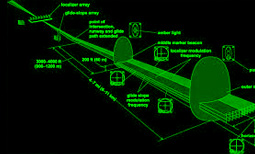 |
| Mass Flow Rate | Mass flow rate refers to the amount of air or fuel passing through an aircraft engine per unit of time. It is critical for calculating engine performance, efficiency, and thrust. |  |
| Master Caution | The master caution is an alert system in the cockpit that signals non-critical system failures or warnings. Pilots must review specific indicators to diagnose and address the issue. |  |
| Maximum Takeoff Weight (MTOW) | MTOW is the highest weight at which an aircraft is certified for takeoff. It includes fuel, passengers, cargo, and crew, and exceeding this limit can compromise safety and performance. | 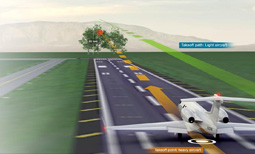 |
| Medlin Mailbox | The Medlin Mailbox (37°27'25"N 115°28'57"W) once a black mailbox near Mailbox Road, gained fame due to UFO enthusiasts associating it with Area 51. Rancher Steve Medlin used it for personal mail, but vandalism and constant tampering led him to replace it with a locked white mailbox. Despite misconceptions, it had no actual connection to Area 51. Due to continued damage, Medlin removed it permanently. | 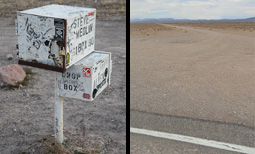 |
| METAR (Meteorological Aerodrome Report) | METAR is a coded format for reporting current weather conditions at an airport. It provides vital information for pilots, including visibility, wind speed, temperature, and runway conditions. | 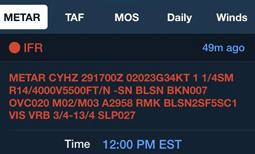 |
| Microwave Landing System (MLS) | MLS is a precision landing aid that uses microwave signals to provide accurate lateral and vertical guidance. It enhances landing safety in low-visibility conditions, especially at busy airports. | 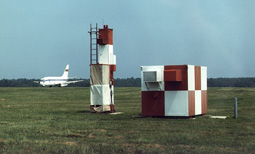 |
| Military Operations Area (MOA) | An MOA is a designated airspace where military training and operations occur. Pilots must check NOTAMs and coordinate with air traffic control to avoid entering active MOAs. | 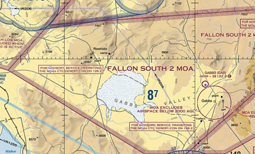 |
| Minimum Descent Altitude (MDA) | MDA is the lowest altitude a pilot can descend to during a non-precision instrument approach without visual contact with the runway or surrounding terrain. | 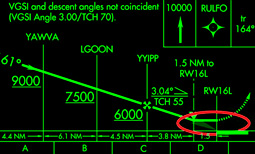 |
| Minimum Equipment List (MEL) | The MEL is a document that outlines equipment that can be inoperative while the aircraft remains airworthy. It ensures operational safety despite minor system failures. | 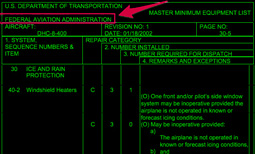 |
| Minimum Fuel | Minimum fuel is a term used by pilots to declare that fuel levels are sufficient for the flight but do not allow for significant delays or diversions without impacting safety margins. | 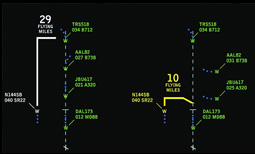 |
| Missed Approach Procedure (MAP) | The MAP is a set of instructions followed when a landing cannot be completed safely. It includes specific altitudes, headings, and waypoints to ensure a controlled return to the holding pattern or alternate approach. | 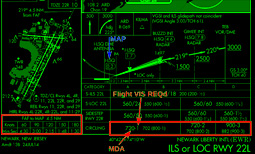 |
| Mode C Transponder | A Mode C transponder transmits altitude data along with the aircraft's identification to air traffic control, enhancing situational awareness and collision avoidance. |  |
| Mode Control Panel (MCP) | The MCP is an autopilot interface in modern aircraft that allows pilots to set altitudes, speeds, headings, and navigation modes. It simplifies flight management and ensures precision in automated operations. |  |
| Mode S Transponder | Mode S transponders provide enhanced data exchange with air traffic control, including aircraft identification, altitude, and additional flight information for modern traffic management systems. |  |
| Montreal Convention | The Montreal Convention is an international treaty that establishes airline liability for passengers, baggage, and cargo. It standardizes compensation rules and promotes fair treatment in international air travel. |  |
| Mountain Wave Turbulence | Mountain wave turbulence occurs when airflow over mountainous terrain creates oscillating wind patterns. It can lead to severe turbulence, requiring pilots to adjust altitude and airspeed for safety. | 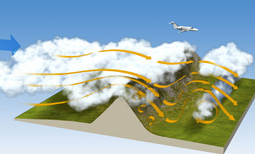 |
| Mount Weather | The Mount Weather Emergency Operations Center (N39°03'47.64" W77°53'16.16") is a top-secret U.S. government bunker in Virginia, designed for continuity of government during national emergencies. Operated by FEMA, it houses critical infrastructure, communications systems, and facilities for key officials. Established during the Cold War, it remains active today as a secure command center for disaster response, crisis coordination, and national security operations. |  |
| Muffler (Aircraft Engine) | A muffler reduces exhaust noise in piston-engine aircraft. It helps comply with noise regulations while maintaining engine efficiency and performance. | 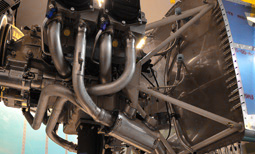 |
| Multi-Crew Coordination (MCC) | MCC is a training program for pilots to develop teamwork, communication, and decision-making skills in multi-crew flight operations, enhancing safety and efficiency in complex aircraft environments. |  |
| Multi-Engine Rating | A multi-engine rating is an additional certification for pilots allowing them to operate aircraft with more than one engine. It includes training on engine-out procedures and performance management. |  |
| Multifunction Display (MFD) | An MFD is a digital screen in modern cockpits that displays navigation, weather, engine data, and flight parameters, reducing pilot workload and enhancing situational awareness. |  |
| Municipal Airport | A municipal airport is owned and operated by a local government, serving general aviation, regional airlines, and community needs. These airports often provide training facilities and support for emergency services. | 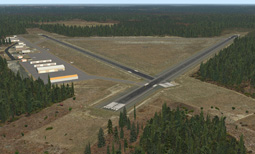 |
| Mylar Insulation | Mylar insulation is a lightweight, heat-resistant material used in aircraft to protect electrical systems, reduce cabin noise, and improve thermal efficiency. | 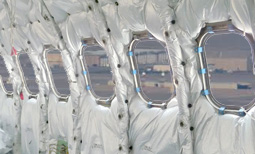 |
