ASX Glossary - S: Difference between revisions
Jump to navigation
Jump to search
No edit summary |
No edit summary |
||
| (2 intermediate revisions by the same user not shown) | |||
| Line 148: | Line 148: | ||
</head> | </head> | ||
<body> | <body> | ||
<table> | |||
<tr | <tr> | ||
<td class="term | <td class="term"> | ||
<a href="https://wiki.alsresume.com/index.php?title= | <a href="https://wiki.alsresume.com/index.php?title=Safe_Life_(Aircraft_Design_Principle)" target="_blank" | ||
style="color: #40E0D0; font-weight: bold; text-decoration: none; cursor: pointer;" | style="color: #40E0D0; font-weight: bold; text-decoration: none; cursor: pointer;" | ||
onmouseover="this.style.color='#ff4f01';" | onmouseover="this.style.color='#ff4f01';" | ||
onmouseout="this.style.color='#40E0D0';"> | onmouseout="this.style.color='#40E0D0';">Safe Life (Aircraft Design Principle)</a> | ||
</td> | |||
<td class="description">Safe life is an engineering principle ensuring that an aircraft component will function safely for a predetermined lifespan before requiring mandatory replacement. Components designed under this philosophy are monitored for fatigue and wear, preventing failures through strict maintenance schedules, particularly in critical structures like landing gear and wings.</td> | |||
<td class="image-column"><img src="https://www.alsresume.com/wp-content/uploads/2025/02/Safe-Life.jpg" alt="Safe Life"></td> | |||
<td class="description"> | |||
<td class="image-column"> | |||
</tr> | </tr> | ||
<tr | <tr> | ||
<td class="term"> | <td class="term"> | ||
<a href="https://wiki.alsresume.com/index.php?title= | <a href="https://wiki.alsresume.com/index.php?title=Satellite_navigation" target="_blank" | ||
style="color: #40E0D0; font-weight: bold; text-decoration: none; cursor: pointer;" | style="color: #40E0D0; font-weight: bold; text-decoration: none; cursor: pointer;" | ||
onmouseover="this.style.color='#ff4f01';" | onmouseover="this.style.color='#ff4f01';" | ||
onmouseout="this.style.color='#40E0D0';"> | onmouseout="this.style.color='#40E0D0';">Satellite Navigation (SatNav)</a> | ||
</td> | |||
<td class="description">Satellite navigation, or SatNav, is a global positioning system used in aviation for precise flight planning and real-time navigation. It improves situational awareness, enhances safety, and allows for accurate approaches, particularly in GPS-based landing systems, replacing traditional ground-based navigation aids in many modern aircraft.</td> | |||
<td class="image-column"><img src="https://www.alsresume.com/wp-content/uploads/2025/02/Satellite-NAv.jpg" alt="Satellite Navigation"></td> | |||
<td class="description"> | |||
<td class="image-column"> | |||
</tr> | </tr> | ||
<tr | <tr> | ||
<td class="term"> | <td class="term"> | ||
<a href="https://wiki.alsresume.com/index.php?title=Aerodynamics" target="_blank" | <a href="https://wiki.alsresume.com/index.php?title=Scalloping_(Aerodynamics)" target="_blank" | ||
style="color: #40E0D0; font-weight: bold; text-decoration: none; cursor: pointer;" | style="color: #40E0D0; font-weight: bold; text-decoration: none; cursor: pointer;" | ||
onmouseover="this.style.color='#ff4f01';" | onmouseover="this.style.color='#ff4f01';" | ||
onmouseout="this.style.color='#40E0D0';"> | onmouseout="this.style.color='#40E0D0';">Scalloping (Aerodynamics)</a> | ||
</td> | |||
<td class="description">Scalloping refers to the aerodynamic phenomenon where sections of an aircraft surface, such as propeller blades or wings, develop a wavy pattern due to pressure differentials. This can cause structural stress, reduce efficiency, and impact lift characteristics, necessitating precise engineering to mitigate its effects.</td> | |||
<td class="image-column"><img src="https://www.alsresume.com/wp-content/uploads/2025/02/Scalloping.jpg | |||
<td class="description"> | " alt="Scalloping"></td> | ||
<td class="image-column"> | |||
</tr> | </tr> | ||
<tr | <tr> | ||
<td class="term"> | <td class="term"> | ||
<a href="https://wiki.alsresume.com/index.php?title= | <a href="https://wiki.alsresume.com/index.php?title=Scramjet" target="_blank" | ||
style="color: #40E0D0; font-weight: bold; text-decoration: none; cursor: pointer;" | style="color: #40E0D0; font-weight: bold; text-decoration: none; cursor: pointer;" | ||
onmouseover="this.style.color='#ff4f01';" | onmouseover="this.style.color='#ff4f01';" | ||
onmouseout="this.style.color='#40E0D0';"> | onmouseout="this.style.color='#40E0D0';">Scramjet (Supersonic Combustion Ramjet)</a> | ||
</td> | |||
<td class="description">A scramjet is an advanced propulsion system designed for hypersonic speeds above Mach 5. Unlike conventional jet engines, scramjets compress incoming air at supersonic speeds without using rotating compressor blades, making them ideal for high-speed military and space applications.</td> | |||
<td class="image-column"><img src="https://www.alsresume.com/wp-content/uploads/2025/02/Ramjet.jpg" alt="Scramjet"></td> | |||
<td class="description"> | |||
<td class="image-column"> | |||
</tr> | </tr> | ||
<tr | <tr> | ||
<td class="term"> | <td class="term"> | ||
<a href="https://wiki.alsresume.com/index.php?title= | <a href="https://wiki.alsresume.com/index.php?title=Sea-Level_Standard_Atmosphere_(SLSA)" target="_blank" | ||
style="color: #40E0D0; font-weight: bold; text-decoration: none; cursor: pointer;" | style="color: #40E0D0; font-weight: bold; text-decoration: none; cursor: pointer;" | ||
onmouseover="this.style.color='#ff4f01';" | onmouseover="this.style.color='#ff4f01';" | ||
onmouseout="this.style.color='#40E0D0';"> | onmouseout="this.style.color='#40E0D0';">Sea-Level Standard Atmosphere (SLSA)</a> | ||
</td> | |||
<td class="description">Sea-Level Standard Atmosphere (SLSA) is a reference model defining standard atmospheric conditions at sea level: 15°C temperature, 1013.25 hPa pressure, and 1.225 kg/m³ air density. It is used in aircraft performance calculations, engine power ratings, and aerodynamic assessments.</td> | |||
<td class="image-column"><img src="https://www.alsresume.com/wp-content/uploads/2025/02/Sea-Level-Standard-Atmosphere-SLSA.jpg" alt="Sea-Level Standard Atmosphere"></td> | |||
<td class="description"> | |||
<td class="image-column"> | |||
</tr> | </tr> | ||
<tr | <tr> | ||
<td class="term"> | <td class="term"> | ||
<a href="https://wiki.alsresume.com/index.php?title= | <a href="https://wiki.alsresume.com/index.php?title=Seaplane_Base" target="_blank" | ||
style="color: #40E0D0; font-weight: bold; text-decoration: none; cursor: pointer;" | style="color: #40E0D0; font-weight: bold; text-decoration: none; cursor: pointer;" | ||
onmouseover="this.style.color='#ff4f01';" | onmouseover="this.style.color='#ff4f01';" | ||
onmouseout="this.style.color='#40E0D0';"> | onmouseout="this.style.color='#40E0D0';">Seaplane Base</a> | ||
</td> | |||
<td class="description">A seaplane base is a dedicated airport or docking facility for seaplanes and amphibious aircraft. It includes water runways, docking areas, and maintenance facilities, allowing for operations in remote areas, coastal regions, or inland lakes where traditional runways are unavailable.</td> | |||
<td class="image-column"><img src="https://www.alsresume.com/wp-content/uploads/2025/02/Philadelphia-Seaplane-Base.jpg" alt="Philadelphia Seaplane Base"></td> | |||
<td class="description"> | |||
<td class="image-column"> | |||
</tr> | </tr> | ||
<tr> | <tr> | ||
<td class="term"> | <td class="term"> | ||
<a href="https://wiki.alsresume.com/index.php?title= | <a href="https://wiki.alsresume.com/index.php?title=Secondary_Flight_Controls" target="_blank" | ||
style="color: #40E0D0; font-weight: bold; text-decoration: none; cursor: pointer;" | style="color: #40E0D0; font-weight: bold; text-decoration: none; cursor: pointer;" | ||
onmouseover="this.style.color='#ff4f01';" | onmouseover="this.style.color='#ff4f01';" | ||
onmouseout="this.style.color='#40E0D0';"> | onmouseout="this.style.color='#40E0D0';">Secondary Flight Controls</a> | ||
</td> | |||
<td class="description">Secondary flight controls include flaps, slats, spoilers, and trim systems that enhance an aircraft’s performance beyond primary control surfaces. They optimize efficiency during takeoff, cruise, and landing, helping pilots manage aerodynamic forces more effectively.</td> | |||
<td class="description"> | <td class="image-column"><img src="https://www.alsresume.com/wp-content/uploads/2025/02/Flaps-Tabs.jpg" alt="Secondary Flight Controls"></td> | ||
<td class="image-column"><img src="https://www.alsresume.com/wp-content/uploads/2025/02/ | |||
</tr> | </tr> | ||
<tr | <tr> | ||
<td class="term"> | <td class="term"> | ||
<a href="https://wiki.alsresume.com/index.php?title= | <a href="https://wiki.alsresume.com/index.php?title=Sector_Entry_(Holding_Patterns)" target="_blank" | ||
style="color: #40E0D0; font-weight: bold; text-decoration: none; cursor: pointer;" | style="color: #40E0D0; font-weight: bold; text-decoration: none; cursor: pointer;" | ||
onmouseover="this.style.color='#ff4f01';" | onmouseover="this.style.color='#ff4f01';" | ||
onmouseout="this.style.color='#40E0D0';"> | onmouseout="this.style.color='#40E0D0';">Sector Entry (Holding Patterns)</a> | ||
</td> | |||
<td class="description">Sector entry refers to the predefined procedures pilots follow to enter a holding pattern at a navigation fix. It ensures orderly traffic management in congested airspace and allows for safe spacing before an approach or clearance to proceed.</td> | |||
<td class="image-column"><img src="https://www.alsresume.com/wp-content/uploads/2025/02/Holding.jpg" alt="Sector Entry"></td> | |||
<td class="description"> | |||
<td class="image-column"> | |||
</tr> | </tr> | ||
<tr | <tr> | ||
<td class="term"> | <td class="term"> | ||
<a href="https://wiki.alsresume.com/index.php?title= | <a href="https://wiki.alsresume.com/index.php?title=Separation_Minimums_(Air_Traffic_Control)" target="_blank" | ||
style="color: #40E0D0; font-weight: bold; text-decoration: none; cursor: pointer;" | style="color: #40E0D0; font-weight: bold; text-decoration: none; cursor: pointer;" | ||
onmouseover="this.style.color='#ff4f01';" | onmouseover="this.style.color='#ff4f01';" | ||
onmouseout="this.style.color='#40E0D0';"> | onmouseout="this.style.color='#40E0D0';">Separation Minimums (Air Traffic Control)</a> | ||
</td> | |||
<td class="description">Separation minimums define the required distance between aircraft in controlled airspace to prevent collisions. These include vertical, horizontal, and time-based separation standards, ensuring safe navigation under both visual and instrument flight rules.</td> | |||
<td class="image-column"><img src="https://www.alsresume.com/wp-content/uploads/2025/02/Separations.jpg" alt="Separation Minimums"></td> | |||
<td class="description"> | |||
<td class="image-column"> | |||
</tr> | </tr> | ||
<tr | <tr> | ||
<td class="term"> | <td class="term"> | ||
<a href="https://wiki.alsresume.com/index.php?title= | <a href="https://wiki.alsresume.com/index.php?title=Ceiling_(aeronautics)" target="_blank" | ||
style="color: #40E0D0; font-weight: bold; text-decoration: none; cursor: pointer;" | style="color: #40E0D0; font-weight: bold; text-decoration: none; cursor: pointer;" | ||
onmouseover="this.style.color='#ff4f01';" | onmouseover="this.style.color='#ff4f01';" | ||
onmouseout="this.style.color='#40E0D0';"> | onmouseout="this.style.color='#40E0D0';">Service Ceiling</a> | ||
</td> | |||
<td class="description">The service ceiling is the maximum altitude at which an aircraft can maintain a specified rate of climb, usually 100 feet per minute. It is an important performance limitation for pilots when planning flights in high-altitude environments.</td> | |||
<td class="image-column"><img src="https://www.alsresume.com/wp-content/uploads/2025/03/Service-Ceiling.jpg" alt="Service Ceiling"></td> | |||
<td class="description"> | |||
<td class="image-column"> | |||
</tr> | </tr> | ||
<tr | <tr> | ||
<td class="term"> | <td class="term"> | ||
<a href="https://wiki.alsresume.com/index.php?title= | <a href="https://wiki.alsresume.com/index.php?title=Shock_Stall_(Supersonic_Aerodynamics)" target="_blank" | ||
style="color: #40E0D0; font-weight: bold; text-decoration: none; cursor: pointer;" | style="color: #40E0D0; font-weight: bold; text-decoration: none; cursor: pointer;" | ||
onmouseover="this.style.color='#ff4f01';" | onmouseover="this.style.color='#ff4f01';" | ||
onmouseout="this.style.color='#40E0D0';"> | onmouseout="this.style.color='#40E0D0';">Shock Stall (Supersonic Aerodynamics)</a> | ||
</td> | |||
<td class="description">A shock stall occurs when a high-speed aircraft encounters shock waves that disrupt airflow over the wings, leading to a sudden loss of lift. This is a critical factor in transonic and supersonic flight, requiring careful speed management and advanced wing design.</td> | |||
<td class="image-column"><img src="https://www.alsresume.com/wp-content/uploads/2025/03/Mach.jpg" alt="Shock Stall"></td> | |||
<td class="description"> | |||
<td class="image-column"> | |||
</tr> | </tr> | ||
<tr | <tr> | ||
<td class="term"> | <td class="term"> | ||
<a href="https:// | <a href="https://wiki.alsresume.com/index.php?title=STOL" target="_blank" | ||
style="color: #40E0D0; font-weight: bold; text-decoration: none; cursor: pointer;" | style="color: #40E0D0; font-weight: bold; text-decoration: none; cursor: pointer;" | ||
onmouseover="this.style.color='#ff4f01';" | onmouseover="this.style.color='#ff4f01';" | ||
onmouseout="this.style.color='#40E0D0';"> | onmouseout="this.style.color='#40E0D0';">Short Takeoff and Landing (STOL)</a> | ||
</td> | |||
<td class="description">STOL aircraft are designed to operate on short runways, using enhanced lift devices such as leading-edge slats, powerful engines, and optimized wing designs. They are used for remote area access, bush flying, and military operations where conventional runways are unavailable.</td> | |||
<td class="image-column"><img src="https://www.alsresume.com/wp-content/uploads/2025/03/STOL.jpg" alt="Short Takeoff and Landing"></td> | |||
<td class="description"> | |||
<td class="image-column"> | |||
</tr> | </tr> | ||
<tr | <tr> | ||
<td class="term"> | <td class="term"> | ||
<a href="https://wiki.alsresume.com/index.php?title= | <a href="https://wiki.alsresume.com/index.php?title=Side-stick" target="_blank" | ||
style="color: #40E0D0; font-weight: bold; text-decoration: none; cursor: pointer;" | style="color: #40E0D0; font-weight: bold; text-decoration: none; cursor: pointer;" | ||
onmouseover="this.style.color='#ff4f01';" | onmouseover="this.style.color='#ff4f01';" | ||
onmouseout="this.style.color='#40E0D0';"> | onmouseout="this.style.color='#40E0D0';">Side Stick Controller</a> | ||
</td> | |||
<td class="description">A side stick is a joystick-style flight control system replacing traditional yokes in modern aircraft. Used in Airbus and fighter jets, it provides precise control inputs and reduces cockpit clutter, improving ergonomics and pilot workload management.</td> | |||
<td class="image-column"><img src="https://www.alsresume.com/wp-content/uploads/2025/03/Side-Stick.jpg" alt="Side Stick Controller"></td> | |||
<td class="description"> | |||
<td class="image-column"> | |||
</tr> | </tr> | ||
<tr | <tr> | ||
<td class="term"> | <td class="term"> | ||
<a href="https://wiki.alsresume.com/index.php?title= | <a href="https://wiki.alsresume.com/index.php?title=Situation_awareness" target="_blank" | ||
style="color: #40E0D0; font-weight: bold; text-decoration: none; cursor: pointer;" | style="color: #40E0D0; font-weight: bold; text-decoration: none; cursor: pointer;" | ||
onmouseover="this.style.color='#ff4f01';" | onmouseover="this.style.color='#ff4f01';" | ||
onmouseout="this.style.color='#40E0D0';"> | onmouseout="this.style.color='#40E0D0';">Situational Awareness (SA)</a> | ||
</td> | |||
<td class="description">Situational awareness refers to a pilot’s ability to accurately perceive flight conditions, including position, weather, traffic, and aircraft performance. It is crucial for decision-making, accident prevention, and safe flight operations, especially in high-pressure or emergency scenarios.</td> | |||
<td class="image-column"><img src="https://www.alsresume.com/wp-content/uploads/2025/03/Situational-Awareness.jpg" alt="Situational Awareness"></td> | |||
<td class="description"> | |||
<td class="image-column"> | |||
</tr> | </tr> | ||
<tr | <tr> | ||
<td class="term"> | <td class="term"> | ||
<a href="https://wiki.alsresume.com/index.php?title= | <a href="https://wiki.alsresume.com/index.php?title=Yaw_String_(Slip_String)" target="_blank" | ||
style="color: #40E0D0; font-weight: bold; text-decoration: none; cursor: pointer;" | style="color: #40E0D0; font-weight: bold; text-decoration: none; cursor: pointer;" | ||
onmouseover="this.style.color='#ff4f01';" | onmouseover="this.style.color='#ff4f01';" | ||
onmouseout="this.style.color='#40E0D0';"> | onmouseout="this.style.color='#40E0D0';">Skid (Yaw Control)</a> | ||
</td> | |||
<td class="description">A skid occurs when an aircraft turns too sharply without sufficient rudder input, causing it to slide sideways. Skids can lead to dangerous loss of control, making coordinated rudder and aileron use essential for smooth, efficient turns.</td> | |||
<td class="image-column"><img src="https://www.alsresume.com/wp-content/uploads/2025/03/Skid.jpg" alt="Skid (Yaw Control)"></td> | |||
<td class="description"> | |||
<td class="image-column"> | |||
</tr> | </tr> | ||
<tr | <tr> | ||
<td class="term"> | <td class="term"> | ||
<a href="https://wiki.alsresume.com/index.php?title= | <a href="https://wiki.alsresume.com/index.php?title=Leading-edge_slat" target="_blank" | ||
style="color: #40E0D0; font-weight: bold; text-decoration: none; cursor: pointer;" | style="color: #40E0D0; font-weight: bold; text-decoration: none; cursor: pointer;" | ||
onmouseover="this.style.color='#ff4f01';" | onmouseover="this.style.color='#ff4f01';" | ||
onmouseout="this.style.color='#40E0D0';"> | onmouseout="this.style.color='#40E0D0';">Slat (Leading Edge Device)</a> | ||
</td> | |||
<td class="description">A slat is a moveable aerodynamic surface on the leading edge of a wing, extending at low speeds to increase lift. It improves stall resistance and enhances takeoff and landing performance by delaying airflow separation.</td> | |||
<td class="image-column"><img src="https://www.alsresume.com/wp-content/uploads/2025/03/slats.jpg" alt="Slat (Leading Edge Device)"></td> | |||
<td class="description"> | |||
<td class="image-column"> | |||
</tr> | </tr> | ||
<tr | <tr> | ||
<td class="term"> | <td class="term"> | ||
<a href="https://wiki.alsresume.com/index.php?title= | <a href="https://wiki.alsresume.com/index.php?title=Slipstream_Effect" target="_blank" | ||
style="color: #40E0D0; font-weight: bold; text-decoration: none; cursor: pointer;" | style="color: #40E0D0; font-weight: bold; text-decoration: none; cursor: pointer;" | ||
onmouseover="this.style.color='#ff4f01';" | onmouseover="this.style.color='#ff4f01';" | ||
onmouseout="this.style.color='#40E0D0';"> | onmouseout="this.style.color='#40E0D0';">Slipstream Effect</a> | ||
</td> | |||
<td class="description">Slipstream refers to the high-velocity air pushed behind a propeller or jet engine. It affects aerodynamic performance and yaw tendencies, requiring pilots to counteract slipstream-induced rolling or yawing motions, particularly during takeoff and landing.</td> | |||
<td class="image-column"><img src="https://www.alsresume.com/wp-content/uploads/2025/03/Slipstream.jpg" alt="Slipstream Effect"></td> | |||
<td class="description"> | |||
<td class="image-column"> | |||
</tr> | </tr> | ||
<tr | <tr> | ||
<td class="term"> | <td class="term"> | ||
<a href="https://wiki.alsresume.com/index.php?title= | <a href="https://wiki.alsresume.com/index.php?title=Leading-edge_slot" target="_blank" | ||
style="color: #40E0D0; font-weight: bold; text-decoration: none; cursor: pointer;" | style="color: #40E0D0; font-weight: bold; text-decoration: none; cursor: pointer;" | ||
onmouseover="this.style.color='#ff4f01';" | onmouseover="this.style.color='#ff4f01';" | ||
onmouseout="this.style.color='#40E0D0';"> | onmouseout="this.style.color='#40E0D0';">Slot (Aerodynamics)</a> | ||
</td> | |||
<td class="description">A slot is a fixed or moveable opening on a wing’s leading edge that enhances airflow over the surface, preventing premature stalls. Used in high-lift wing designs, slots improve performance in slow-speed operations.</td> | |||
<td class="image-column"><img src="https://www.alsresume.com/wp-content/uploads/2025/03/Slotted-Wing.jpg" alt="Slot (Aerodynamics)"></td> | |||
<td class="description"> | |||
<td class="image-column"> | |||
</tr> | </tr> | ||
<tr | <tr> | ||
<td class="term"> | <td class="term"> | ||
<a href="https://wiki.alsresume.com/index.php?title= | <a href="https://wiki.alsresume.com/index.php?title=Sluggish_Controls_(High-Altitude_Effects)" target="_blank" | ||
style="color: #40E0D0; font-weight: bold; text-decoration: none; cursor: pointer;" | style="color: #40E0D0; font-weight: bold; text-decoration: none; cursor: pointer;" | ||
onmouseover="this.style.color='#ff4f01';" | onmouseover="this.style.color='#ff4f01';" | ||
onmouseout="this.style.color='#40E0D0';"> | onmouseout="this.style.color='#40E0D0';">Sluggish Controls (High-Altitude Effects)</a> | ||
</td> | |||
<td class="description">At high altitudes, thinner air can make an aircraft’s control surfaces feel less responsive, a phenomenon known as sluggish controls. Pilots must anticipate this effect, using greater control deflections or hydraulic assistance to maintain precise handling.</td> | |||
<td class="image-column"><img src="https://www.alsresume.com/wp-content/uploads/2025/03/Sluggish-controls.jpg" alt="Sluggish Controls (High-Altitude Effects)"></td> | |||
<td class="description"> | |||
<td class="image-column"> | |||
</tr> | </tr> | ||
<tr | <tr> | ||
<td class="term"> | <td class="term"> | ||
<a href="https://wiki.alsresume.com/index.php?title= | <a href="https://wiki.alsresume.com/index.php?title=Spoiler_(aeronautics)" target="_blank" | ||
style="color: #40E0D0; font-weight: bold; text-decoration: none; cursor: pointer;" | style="color: #40E0D0; font-weight: bold; text-decoration: none; cursor: pointer;" | ||
onmouseover="this.style.color='#ff4f01';" | onmouseover="this.style.color='#ff4f01';" | ||
onmouseout="this.style.color='#40E0D0';"> | onmouseout="this.style.color='#40E0D0';">Speed Brakes (Spoilers)</a> | ||
</td> | |||
<td class="description">Speed brakes are aerodynamic surfaces that deploy to increase drag and reduce speed. They are commonly used during descent, approach, and landing to manage airspeed without overloading the braking system.</td> | |||
<td class="image-column"><img src="https://www.alsresume.com/wp-content/uploads/2025/03/Speedbreaks.jpg" alt="Speed Brakes"></td> | |||
<td class="description"> | |||
<td class="image-column"> | |||
</tr> | </tr> | ||
<tr | <tr> | ||
<td class="term"> | <td class="term"> | ||
<a href="https://wiki.alsresume.com/index.php?title= | <a href="https://wiki.alsresume.com/index.php?title=Spin_(aerodynamics)" target="_blank" | ||
style="color: #40E0D0; font-weight: bold; text-decoration: none; cursor: pointer;" | style="color: #40E0D0; font-weight: bold; text-decoration: none; cursor: pointer;" | ||
onmouseover="this.style.color='#ff4f01';" | onmouseover="this.style.color='#ff4f01';" | ||
onmouseout="this.style.color='#40E0D0';"> | onmouseout="this.style.color='#40E0D0';">Spin Recovery</a> | ||
</td> | |||
<td class="description">Spin recovery is the procedure pilots use to regain control after an aircraft enters an aerodynamic spin. It involves reducing power, applying opposite rudder, and neutralizing the ailerons to break the spin cycle and restore controlled flight.</td> | |||
<td class="image-column"><img src="https://www.alsresume.com/wp-content/uploads/2025/03/Spin-Recovery.jpg" alt="Spin Recovery"></td> | |||
<td class="description"> | |||
<td class="image-column"> | |||
</tr> | </tr> | ||
<tr> | |||
<td class="term"> | <td class="term"> | ||
<a href="https://wiki.alsresume.com/index.php?title= | <a href="https://wiki.alsresume.com/index.php?title=Spoileron" target="_blank" | ||
style="color: #40E0D0; font-weight: bold; text-decoration: none; cursor: pointer;" | style="color: #40E0D0; font-weight: bold; text-decoration: none; cursor: pointer;" | ||
onmouseover="this.style.color='#ff4f01';" | onmouseover="this.style.color='#ff4f01';" | ||
onmouseout="this.style.color='#40E0D0';"> | onmouseout="this.style.color='#40E0D0';">Spoileron (Roll Control Device)</a> | ||
</td> | |||
<td class="description">A spoileron is a combination of a spoiler and an aileron, used to enhance roll control while reducing lift. Found on advanced aircraft, spoilerons assist in smoother maneuvering and greater stability in high-speed flight.</td> | |||
<td class="image-column"><img src="https://www.alsresume.com/wp-content/uploads/2025/03/Spoileron.jpg" alt="Spoileron (Roll Control Device)"></td> | |||
<td class="description"> | |||
<td class="image-column"> | |||
</tr> | </tr> | ||
<tr | <tr> | ||
<td class="term"> | <td class="term"> | ||
<a href="https://wiki.alsresume.com/index.php?title= | <a href="https://wiki.alsresume.com/index.php?title=List_of_transponder_codes" target="_blank" | ||
style="color: #40E0D0; font-weight: bold; text-decoration: none; cursor: pointer;" | style="color: #40E0D0; font-weight: bold; text-decoration: none; cursor: pointer;" | ||
onmouseover="this.style.color='#ff4f01';" | onmouseover="this.style.color='#ff4f01';" | ||
onmouseout="this.style.color='#40E0D0';"> | onmouseout="this.style.color='#40E0D0';">Squawk Code (Transponder Setting)</a> | ||
</td> | |||
<td class="description">A squawk code is a four-digit number assigned by air traffic control for aircraft identification. It allows controllers to track and communicate with aircraft efficiently, including emergency codes like 7500 (hijacking), 7600 (radio failure), and 7700 (emergency).</td> | |||
<td class="image-column"><img src="https://www.alsresume.com/wp-content/uploads/2025/03/Skwalk.jpg" alt="Squawk Code (Transponder Setting)"></td> | |||
<td class="description"> | |||
<td class="image-column"> | |||
</tr> | </tr> | ||
<tr | <tr> | ||
<td class="term"> | <td class="term"> | ||
<a href="https://wiki.alsresume.com/index.php?title= | <a href="https://wiki.alsresume.com/index.php?title=Stall_Margin" target="_blank" | ||
style="color: #40E0D0; font-weight: bold; text-decoration: none; cursor: pointer;" | style="color: #40E0D0; font-weight: bold; text-decoration: none; cursor: pointer;" | ||
onmouseover="this.style.color='#ff4f01';" | onmouseover="this.style.color='#ff4f01';" | ||
onmouseout="this.style.color='#40E0D0';"> | onmouseout="this.style.color='#40E0D0';">Stall Margin</a> | ||
</td> | |||
<td class="description">Stall margin is the buffer between an aircraft’s current angle of attack and its critical stall angle. Maintaining a sufficient stall margin ensures safe operations, particularly during takeoff, landing, and maneuvering in turbulent air.</td> | |||
<td class="image-column"><img src="https://www.alsresume.com/wp-content/uploads/2025/03/Stall-Margin.jpg" alt="Stall Margin"></td> | |||
<td class="description"> | |||
<td class="image-column"> | |||
</tr> | </tr> | ||
<tr | <tr> | ||
<td class="term"> | <td class="term"> | ||
<a href="https://wiki.alsresume.com/index.php?title= | <a href="https://wiki.alsresume.com/index.php?title=Static_Discharger_(Lightning_Protection)" target="_blank" | ||
style="color: #40E0D0; font-weight: bold; text-decoration: none; cursor: pointer;" | style="color: #40E0D0; font-weight: bold; text-decoration: none; cursor: pointer;" | ||
onmouseover="this.style.color='#ff4f01';" | onmouseover="this.style.color='#ff4f01';" | ||
onmouseout="this.style.color='#40E0D0';"> | onmouseout="this.style.color='#40E0D0';">Static Discharger (Lightning Protection)</a> | ||
</td> | |||
<td class="description">A static discharger is a small rod or wick on an aircraft that dissipates built-up electrical charge, reducing the risk of lightning strikes and radio interference. These devices enhance the safety of communication and navigation systems.</td> | |||
<td class="image-column"><img src="https://www.alsresume.com/wp-content/uploads/2025/03/Static.jpg" alt="Static Discharger (Lightning Protection)"></td> | |||
<td class="description"> | |||
<td class="image-column"> | |||
</tr> | </tr> | ||
<tr | <tr> | ||
<td class="term"> | <td class="term"> | ||
<a href="https://wiki.alsresume.com/index.php?title= | <a href="https://wiki.alsresume.com/index.php?title=Pitot%E2%80%93static_system" target="_blank" | ||
style="color: #40E0D0; font-weight: bold; text-decoration: none; cursor: pointer;" | style="color: #40E0D0; font-weight: bold; text-decoration: none; cursor: pointer;" | ||
onmouseover="this.style.color='#ff4f01';" | onmouseover="this.style.color='#ff4f01';" | ||
onmouseout="this.style.color='#40E0D0';"> | onmouseout="this.style.color='#40E0D0';">Static Port (Pitot-Static System Component)</a> | ||
</td> | |||
<td class="description">A static port is an external opening on an aircraft that measures atmospheric pressure for the pitot-static system. It provides essential data for airspeed, altitude, and vertical speed indicators.</td> | |||
<td class="image-column"><img src="https://www.alsresume.com/wp-content/uploads/2025/02/Pitot-Tube.jpg" alt="Static Port (Pitot-Static System Component)"></td> | |||
<td class="description"> | |||
<td class="image-column"> | |||
</tr> | </tr> | ||
<tr | <tr> | ||
<td class="term"> | <td class="term"> | ||
<a href="https://wiki.alsresume.com/index.php?title= | <a href="https://wiki.alsresume.com/index.php?title=Step_Climb_(Fuel_Efficiency_Technique)" target="_blank" | ||
style="color: #40E0D0; font-weight: bold; text-decoration: none; cursor: pointer;" | style="color: #40E0D0; font-weight: bold; text-decoration: none; cursor: pointer;" | ||
onmouseover="this.style.color='#ff4f01';" | onmouseover="this.style.color='#ff4f01';" | ||
onmouseout="this.style.color='#40E0D0';"> | onmouseout="this.style.color='#40E0D0';">Step Climb (Fuel Efficiency Technique)</a> | ||
</td> | |||
<td class="description">A step climb is a gradual increase in cruising altitude during long-haul flights to optimize fuel efficiency. As an aircraft burns fuel and becomes lighter, it can ascend to higher, more efficient flight levels.</td> | |||
<td class="image-column"><img src="https://www.alsresume.com/wp-content/uploads/2025/03/Step-Climb.jpg" alt="Step Climb"></td> | |||
<td class="description"> | |||
<td class="image-column"> | |||
</tr> | </tr> | ||
<tr | <tr> | ||
<td class="term"> | <td class="term"> | ||
<a href="https://wiki.alsresume.com/index.php?title= | <a href="https://wiki.alsresume.com/index.php?title=Supersonic_transport" target="_blank" | ||
style="color: #40E0D0; font-weight: bold; text-decoration: none; cursor: pointer;" | style="color: #40E0D0; font-weight: bold; text-decoration: none; cursor: pointer;" | ||
onmouseover="this.style.color='#ff4f01';" | onmouseover="this.style.color='#ff4f01';" | ||
onmouseout="this.style.color='#40E0D0';"> | onmouseout="this.style.color='#40E0D0';">Supersonic Transport (SST)</a> | ||
</td> | |||
<td class="description">Supersonic transport refers to commercial aircraft capable of flying faster than Mach 1, such as the Concorde. SSTs significantly reduce travel time but require specialized aerodynamics and materials to withstand high-speed stresses.</td> | |||
<td class="image-column"><img src="https://www.alsresume.com/wp-content/uploads/2025/03/SST.jpg" alt="Supersonic Transport"></td> | |||
<td class="description"> | |||
<td class="image-column"> | |||
</tr> | </tr> | ||
<tr | <tr> | ||
<td class="term"> | <td class="term"> | ||
<a href="https://wiki.alsresume.com/index.php?title= | <a href="https://wiki.alsresume.com/index.php?title=Synthetic_vision_system" target="_blank" | ||
style="color: #40E0D0; font-weight: bold; text-decoration: none; cursor: pointer;" | style="color: #40E0D0; font-weight: bold; text-decoration: none; cursor: pointer;" | ||
onmouseover="this.style.color='#ff4f01';" | onmouseover="this.style.color='#ff4f01';" | ||
onmouseout="this.style.color='#40E0D0';"> | onmouseout="this.style.color='#40E0D0';">Synthetic Vision System (SVS)</a> | ||
</td> | |||
<td class="description">SVS is an advanced avionics technology that displays a real-time, 3D-rendered view of terrain, runways, and obstacles on cockpit screens. It enhances pilot awareness in low-visibility conditions, improving safety and navigation accuracy.</td> | |||
<td class="image-column"><img src="https://www.alsresume.com/wp-content/uploads/2025/03/SVS.jpg" alt="Synthetic Vision System (SVS)"></td> | |||
<td class="description"> | |||
<td class="image-column"> | |||
</tr> | </tr> | ||
</table> | |||
</body> | </body> | ||
</html> | </html> | ||
Latest revision as of 19:35, 23 April 2025

| Click on term for full definition | Click here to report corrections and content addition requests |
| Safe Life (Aircraft Design Principle) | Safe life is an engineering principle ensuring that an aircraft component will function safely for a predetermined lifespan before requiring mandatory replacement. Components designed under this philosophy are monitored for fatigue and wear, preventing failures through strict maintenance schedules, particularly in critical structures like landing gear and wings. | 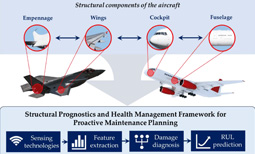 |
| Satellite Navigation (SatNav) | Satellite navigation, or SatNav, is a global positioning system used in aviation for precise flight planning and real-time navigation. It improves situational awareness, enhances safety, and allows for accurate approaches, particularly in GPS-based landing systems, replacing traditional ground-based navigation aids in many modern aircraft. |  |
| Scalloping (Aerodynamics) | Scalloping refers to the aerodynamic phenomenon where sections of an aircraft surface, such as propeller blades or wings, develop a wavy pattern due to pressure differentials. This can cause structural stress, reduce efficiency, and impact lift characteristics, necessitating precise engineering to mitigate its effects. | 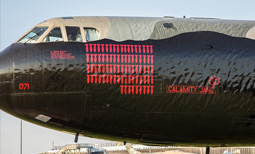 |
| Scramjet (Supersonic Combustion Ramjet) | A scramjet is an advanced propulsion system designed for hypersonic speeds above Mach 5. Unlike conventional jet engines, scramjets compress incoming air at supersonic speeds without using rotating compressor blades, making them ideal for high-speed military and space applications. | 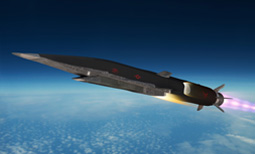 |
| Sea-Level Standard Atmosphere (SLSA) | Sea-Level Standard Atmosphere (SLSA) is a reference model defining standard atmospheric conditions at sea level: 15°C temperature, 1013.25 hPa pressure, and 1.225 kg/m³ air density. It is used in aircraft performance calculations, engine power ratings, and aerodynamic assessments. | 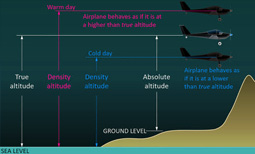 |
| Seaplane Base | A seaplane base is a dedicated airport or docking facility for seaplanes and amphibious aircraft. It includes water runways, docking areas, and maintenance facilities, allowing for operations in remote areas, coastal regions, or inland lakes where traditional runways are unavailable. | 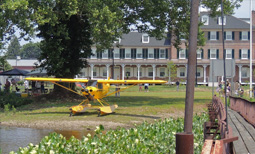 |
| Secondary Flight Controls | Secondary flight controls include flaps, slats, spoilers, and trim systems that enhance an aircraft’s performance beyond primary control surfaces. They optimize efficiency during takeoff, cruise, and landing, helping pilots manage aerodynamic forces more effectively. | 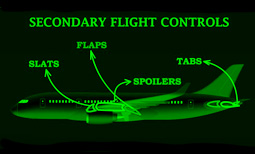 |
| Sector Entry (Holding Patterns) | Sector entry refers to the predefined procedures pilots follow to enter a holding pattern at a navigation fix. It ensures orderly traffic management in congested airspace and allows for safe spacing before an approach or clearance to proceed. | 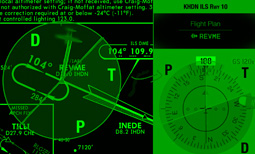 |
| Separation Minimums (Air Traffic Control) | Separation minimums define the required distance between aircraft in controlled airspace to prevent collisions. These include vertical, horizontal, and time-based separation standards, ensuring safe navigation under both visual and instrument flight rules. | 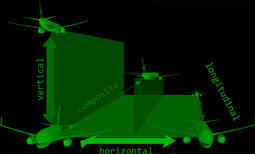 |
| Service Ceiling | The service ceiling is the maximum altitude at which an aircraft can maintain a specified rate of climb, usually 100 feet per minute. It is an important performance limitation for pilots when planning flights in high-altitude environments. | 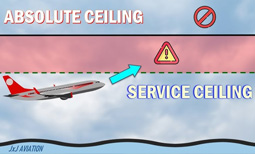 |
| Shock Stall (Supersonic Aerodynamics) | A shock stall occurs when a high-speed aircraft encounters shock waves that disrupt airflow over the wings, leading to a sudden loss of lift. This is a critical factor in transonic and supersonic flight, requiring careful speed management and advanced wing design. | 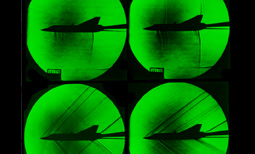 |
| Short Takeoff and Landing (STOL) | STOL aircraft are designed to operate on short runways, using enhanced lift devices such as leading-edge slats, powerful engines, and optimized wing designs. They are used for remote area access, bush flying, and military operations where conventional runways are unavailable. | 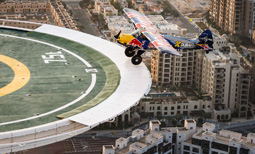 |
| Side Stick Controller | A side stick is a joystick-style flight control system replacing traditional yokes in modern aircraft. Used in Airbus and fighter jets, it provides precise control inputs and reduces cockpit clutter, improving ergonomics and pilot workload management. | 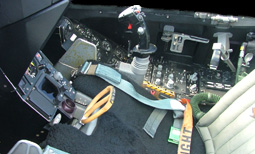 |
| Situational Awareness (SA) | Situational awareness refers to a pilot’s ability to accurately perceive flight conditions, including position, weather, traffic, and aircraft performance. It is crucial for decision-making, accident prevention, and safe flight operations, especially in high-pressure or emergency scenarios. | 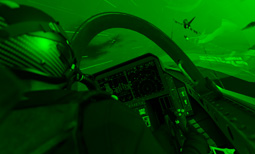 |
| Skid (Yaw Control) | A skid occurs when an aircraft turns too sharply without sufficient rudder input, causing it to slide sideways. Skids can lead to dangerous loss of control, making coordinated rudder and aileron use essential for smooth, efficient turns. | 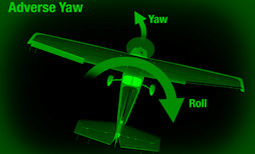 |
| Slat (Leading Edge Device) | A slat is a moveable aerodynamic surface on the leading edge of a wing, extending at low speeds to increase lift. It improves stall resistance and enhances takeoff and landing performance by delaying airflow separation. | 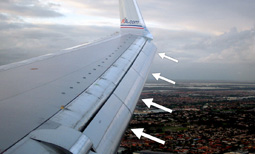 |
| Slipstream Effect | Slipstream refers to the high-velocity air pushed behind a propeller or jet engine. It affects aerodynamic performance and yaw tendencies, requiring pilots to counteract slipstream-induced rolling or yawing motions, particularly during takeoff and landing. | 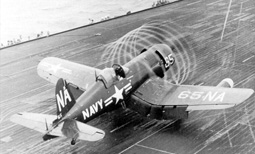 |
| Slot (Aerodynamics) | A slot is a fixed or moveable opening on a wing’s leading edge that enhances airflow over the surface, preventing premature stalls. Used in high-lift wing designs, slots improve performance in slow-speed operations. | 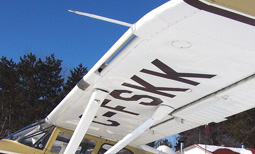 |
| Sluggish Controls (High-Altitude Effects) | At high altitudes, thinner air can make an aircraft’s control surfaces feel less responsive, a phenomenon known as sluggish controls. Pilots must anticipate this effect, using greater control deflections or hydraulic assistance to maintain precise handling. |  |
| Speed Brakes (Spoilers) | Speed brakes are aerodynamic surfaces that deploy to increase drag and reduce speed. They are commonly used during descent, approach, and landing to manage airspeed without overloading the braking system. | 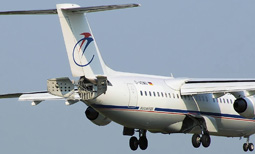 |
| Spin Recovery | Spin recovery is the procedure pilots use to regain control after an aircraft enters an aerodynamic spin. It involves reducing power, applying opposite rudder, and neutralizing the ailerons to break the spin cycle and restore controlled flight. | 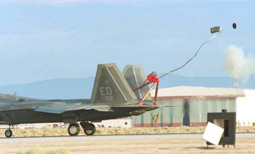 |
| Spoileron (Roll Control Device) | A spoileron is a combination of a spoiler and an aileron, used to enhance roll control while reducing lift. Found on advanced aircraft, spoilerons assist in smoother maneuvering and greater stability in high-speed flight. | 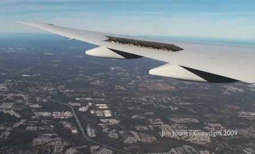 |
| Squawk Code (Transponder Setting) | A squawk code is a four-digit number assigned by air traffic control for aircraft identification. It allows controllers to track and communicate with aircraft efficiently, including emergency codes like 7500 (hijacking), 7600 (radio failure), and 7700 (emergency). | 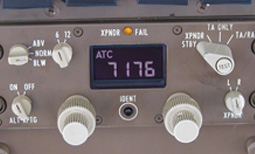 |
| Stall Margin | Stall margin is the buffer between an aircraft’s current angle of attack and its critical stall angle. Maintaining a sufficient stall margin ensures safe operations, particularly during takeoff, landing, and maneuvering in turbulent air. |  |
| Static Discharger (Lightning Protection) | A static discharger is a small rod or wick on an aircraft that dissipates built-up electrical charge, reducing the risk of lightning strikes and radio interference. These devices enhance the safety of communication and navigation systems. | 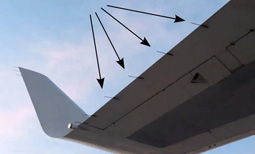 |
| Static Port (Pitot-Static System Component) | A static port is an external opening on an aircraft that measures atmospheric pressure for the pitot-static system. It provides essential data for airspeed, altitude, and vertical speed indicators. | 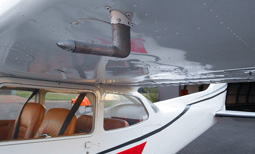 |
| Step Climb (Fuel Efficiency Technique) | A step climb is a gradual increase in cruising altitude during long-haul flights to optimize fuel efficiency. As an aircraft burns fuel and becomes lighter, it can ascend to higher, more efficient flight levels. | 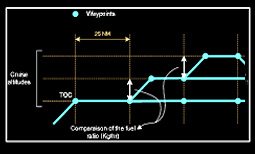 |
| Supersonic Transport (SST) | Supersonic transport refers to commercial aircraft capable of flying faster than Mach 1, such as the Concorde. SSTs significantly reduce travel time but require specialized aerodynamics and materials to withstand high-speed stresses. | 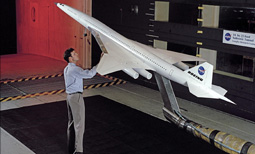 |
| Synthetic Vision System (SVS) | SVS is an advanced avionics technology that displays a real-time, 3D-rendered view of terrain, runways, and obstacles on cockpit screens. It enhances pilot awareness in low-visibility conditions, improving safety and navigation accuracy. | 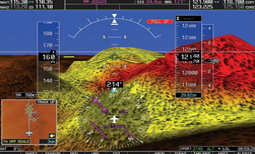 |
