ASX Glossary - B: Difference between revisions
Jump to navigation
Jump to search
No edit summary |
No edit summary |
||
| (12 intermediate revisions by the same user not shown) | |||
| Line 148: | Line 148: | ||
</head> | </head> | ||
<body> | <body> | ||
<table> | |||
<tr id="Back Pressure"> | |||
<tr id=" | |||
<td class="term"> | <td class="term"> | ||
<a href="https://wiki.alsresume.com/index.php?title= | <a href="https://wiki.alsresume.com/index.php?title=Turbocharger" target="_blank" | ||
style="color: #40E0D0; font-weight: bold; text-decoration: none; cursor: pointer;" | style="color: #40E0D0; font-weight: bold; text-decoration: none; cursor: pointer;" | ||
onmouseover="this.style.color='#ff4f01';" | onmouseover="this.style.color='#ff4f01';" | ||
onmouseout="this.style.color='#40E0D0';"> | onmouseout="this.style.color='#40E0D0';">Back Pressure | ||
</a> | </a> | ||
</td> | </td> | ||
<td class="description">Back pressure is the resistance to airflow in an aircraft engine’s exhaust system, affecting performance and fuel efficiency. Excessive back pressure can reduce engine power, increase fuel consumption, and cause overheating. Engineers design exhaust systems to optimize pressure balance, ensuring efficient expulsion of gases while maintaining thrust and engine longevity.</td> | |||
<td class="image-column"><img src="https://www.alsresume.com/wp-content/uploads/2025/02/Backpressure.jpg" alt="Back Pressure"></td> | |||
</tr> | |||
</tr> | |||
<tr id=" | <tr id="Ballast"> | ||
<td class="term"> | <td class="term"> | ||
<a href="https://wiki.alsresume.com/index.php?title= | <a href="https://wiki.alsresume.com/index.php?title=Ballast" target="_blank" | ||
style="color: #40E0D0; font-weight: bold; text-decoration: none; cursor: pointer;" | style="color: #40E0D0; font-weight: bold; text-decoration: none; cursor: pointer;" | ||
onmouseover="this.style.color='#ff4f01';" | onmouseover="this.style.color='#ff4f01';" | ||
onmouseout="this.style.color='#40E0D0';"> | onmouseout="this.style.color='#40E0D0';">Ballast | ||
</a> | </a> | ||
</td> | </td> | ||
<td class="description">Ballast is additional weight added to an aircraft to maintain the proper center of gravity (CG) for safe and stable flight. It can take the form of lead plates, sandbags, or fuel adjustments. Proper CG balance ensures predictable control responses, preventing instability, excessive nose-up or nose-down tendencies, and potential loss of control.</td> | |||
<td class="image-column"><img src="https://www.alsresume.com/wp-content/uploads/2025/02/Ballast.jpg" alt="Ballast"></td> | |||
</tr> | |||
</tr> | |||
<tr id=" | <tr id="Balloon"> | ||
<td class="term"> | <td class="term"> | ||
<a href="https://wiki.alsresume.com/index.php?title= | <a href="https://wiki.alsresume.com/index.php?title=Balloon" target="_blank" | ||
style="color: #40E0D0; font-weight: bold; text-decoration: none; cursor: pointer;" | style="color: #40E0D0; font-weight: bold; text-decoration: none; cursor: pointer;" | ||
onmouseover="this.style.color='#ff4f01';" | onmouseover="this.style.color='#ff4f01';" | ||
onmouseout="this.style.color='#40E0D0';"> | onmouseout="this.style.color='#40E0D0';">Balloon | ||
</a> | </a> | ||
</td> | </td> | ||
<td class="description">An unpowered lighter-than-air craft that remains aloft due to its buoyancy. Balloons can be free-floating or tethered to a fixed point. They are often used for meteorological observations, leisure flights, scientific experiments, and even surveillance. Hot air balloons rely on heated air, while gas balloons use lighter-than-air gases like helium or hydrogen.</td> | |||
<td class="image-column"><img src="https://www.alsresume.com/wp-content/uploads/2025/02/Balloon.jpg" alt="Balloon"></td> | |||
</tr> | |||
</tr> | |||
<tr id=" | <tr id="Bank Angle"> | ||
<td class="term"> | <td class="term"> | ||
<a href="https://wiki.alsresume.com/index.php?title= | <a href="https://wiki.alsresume.com/index.php?title=Banked_turn" target="_blank" | ||
style="color: #40E0D0; font-weight: bold; text-decoration: none; cursor: pointer;" | style="color: #40E0D0; font-weight: bold; text-decoration: none; cursor: pointer;" | ||
onmouseover="this.style.color='#ff4f01';" | onmouseover="this.style.color='#ff4f01';" | ||
onmouseout="this.style.color='#40E0D0';"> | onmouseout="this.style.color='#40E0D0';">Bank Angle | ||
</a> | </a> | ||
</td> | </td> | ||
<td class="description">The bank angle is the measure of an aircraft’s lateral tilt relative to the horizontal plane during a turn. It is achieved by adjusting the ailerons to roll the aircraft. The greater the bank angle, the tighter the turn radius. Proper control of bank angle is essential for maintaining stability and coordinated flight.</td> | |||
<td class="image-column"><img src="https://www.alsresume.com/wp-content/uploads/2025/02/Bank-Angle.jpg" alt="Bank Angle"></td> | |||
</tr> | |||
</tr> | |||
<tr id=" | <tr id="Barometric Altimeter"> | ||
<td class="term"> | <td class="term"> | ||
<a href="https://wiki.alsresume.com/index.php?title= | <a href="https://wiki.alsresume.com/index.php?title=Pressure_altimeter" target="_blank" | ||
style="color: #40E0D0; font-weight: bold; text-decoration: none; cursor: pointer;" | style="color: #40E0D0; font-weight: bold; text-decoration: none; cursor: pointer;" | ||
onmouseover="this.style.color='#ff4f01';" | onmouseover="this.style.color='#ff4f01';" | ||
onmouseout="this.style.color='#40E0D0';"> | onmouseout="this.style.color='#40E0D0';">Barometric Altimeter | ||
</a> | </a> | ||
</td> | </td> | ||
<td class="description">A barometric altimeter measures altitude by sensing atmospheric pressure changes and comparing them to a standard pressure lapse rate. The instrument displays altitude based on preset atmospheric pressure conditions, which must be adjusted for accurate readings. It is a primary tool for maintaining flight levels and ensuring safe separation between aircraft.</td> | |||
<td class="image-column"><img src="https://www.alsresume.com/wp-content/uploads/2025/02/Barametric-Altimeter.jpg" alt="Barometric Altimeter"></td> | |||
</tr> | |||
</tr> | |||
<tr id=" | <tr id="Beacon"> | ||
<td class="term"> | <td class="term"> | ||
<a href="https://wiki.alsresume.com/index.php?title= | <a href="https://wiki.alsresume.com/index.php?title=Airport_Rotating_Beacon" target="_blank" | ||
style="color: #40E0D0; font-weight: bold; text-decoration: none; cursor: pointer;" | style="color: #40E0D0; font-weight: bold; text-decoration: none; cursor: pointer;" | ||
onmouseover="this.style.color='#ff4f01';" | onmouseover="this.style.color='#ff4f01';" | ||
onmouseout="this.style.color='#40E0D0';"> | onmouseout="this.style.color='#40E0D0';">Beacon | ||
</a> | </a> | ||
</td> | </td> | ||
<td class="description">A beacon is a visual or electronic signal used for navigation and aircraft identification. Airports use rotating beacons to help pilots locate runways, while aircraft have anti-collision beacons to signal their presence. Navigational beacons, such as VORs and NDBs, provide crucial guidance for en-route and approach phases of flight.</td> | |||
<td class="image-column"><img src="https://www.alsresume.com/wp-content/uploads/2025/02/Beacon.jpg" alt="Beacon"></td> | |||
</tr> | |||
<tr id="Belly Landing"> | |||
<td class="term"> | |||
</tr> | <a href="https://wiki.alsresume.com/index.php?title=Belly_landing" target="_blank" | ||
<tr> | |||
<a href="https://wiki.alsresume.com/index.php?title= | |||
style="color: #40E0D0; font-weight: bold; text-decoration: none; cursor: pointer;" | style="color: #40E0D0; font-weight: bold; text-decoration: none; cursor: pointer;" | ||
onmouseover="this.style.color='#ff4f01';" | onmouseover="this.style.color='#ff4f01';" | ||
onmouseout="this.style.color='#40E0D0';"> | onmouseout="this.style.color='#40E0D0';">Belly Landing | ||
</a> | </a> | ||
</td> | </td> | ||
<td class="description">A belly landing is an emergency procedure in which an aircraft lands without deploying its landing gear. This can occur due to mechanical failure, hydraulic system malfunctions, or human error. Pilots perform controlled belly landings on suitable surfaces to minimize damage and increase the chances of safe evacuation for passengers and crew.</td> | |||
<td class="image-column"><img src="https://www.alsresume.com/wp-content/uploads/2025/02/Belly-Landong.jpg" alt="Belly Landing"></td> | |||
</tr> | </tr> | ||
<tr id=" | <tr id="Biplane"> | ||
<td class="term"> | <td class="term"> | ||
<a href="https://wiki.alsresume.com/index.php?title= | <a href="https://wiki.alsresume.com/index.php?title=Biplane" target="_blank" | ||
style="color: #40E0D0; font-weight: bold; text-decoration: none; cursor: pointer;" | style="color: #40E0D0; font-weight: bold; text-decoration: none; cursor: pointer;" | ||
onmouseover="this.style.color='#ff4f01';" | onmouseover="this.style.color='#ff4f01';" | ||
onmouseout="this.style.color='#40E0D0';"> | onmouseout="this.style.color='#40E0D0';">Biplane | ||
</a> | </a> | ||
</td> | </td> | ||
<td class="description">An aircraft with two wings stacked one above the other, commonly used in the early years of aviation. Biplanes provide increased lift, allowing for shorter takeoffs and greater maneuverability. However, they also generate higher drag, limiting speed. They were widely used in World War I, barnstorming, and aerobatic performances before monoplane designs became dominant.</td> | |||
<td class="image-column"><img src="https://www.alsresume.com/wp-content/uploads/2025/02/Biplane.jpg" alt="Biplane"></td> | |||
</tr> | |||
</tr> | |||
<tr id=" | <tr id="Blade Tip"> | ||
<td class="term"> | <td class="term"> | ||
<a href="https://wiki.alsresume.com/index.php?title= | <a href="https://wiki.alsresume.com/index.php?title=Propeller_(aeronautics)" target="_blank" | ||
style="color: #40E0D0; font-weight: bold; text-decoration: none; cursor: pointer;" | style="color: #40E0D0; font-weight: bold; text-decoration: none; cursor: pointer;" | ||
onmouseover="this.style.color='#ff4f01';" | onmouseover="this.style.color='#ff4f01';" | ||
onmouseout="this.style.color='#40E0D0';"> | onmouseout="this.style.color='#40E0D0';">Blade Tip | ||
</a> | </a> | ||
</td> | </td> | ||
<td class="description">The blade tip is the outermost edge of a propeller or rotor blade, playing a critical role in aerodynamic efficiency, noise reduction, and performance. Blade tips are often designed with special shapes, such as swept or scimitar styles, to reduce drag, minimize noise, and improve thrust while preventing excessive vibration and stress.</td> | |||
<td class="image-column"><img src="https://www.alsresume.com/wp-content/uploads/2025/02/Blade-Tip.jpg" alt="Blade Tip"></td> | |||
</tr> | |||
</tr> | |||
<tr id=" | <tr id="Blancolirio (Juan Browne)"> | ||
<td class="term"> | <td class="term"> | ||
<a href="https://wiki.alsresume.com/index.php?title= | <a href="https://wiki.alsresume.com/index.php?title=Blancolirio_(Juan_Browne)" target="_blank" | ||
style="color: #40E0D0; font-weight: bold; text-decoration: none; cursor: pointer;" | style="color: #40E0D0; font-weight: bold; text-decoration: none; cursor: pointer;" | ||
onmouseover="this.style.color='#ff4f01';" | onmouseover="this.style.color='#ff4f01';" | ||
onmouseout="this.style.color='#40E0D0';"> | onmouseout="this.style.color='#40E0D0';">Blancolirio (Juan Browne) | ||
</a> | </a> | ||
</td> | </td> | ||
<td class="description">Blancolirio, led by Juan Browne, is a renowned aviation-focused YouTube channel delivering expert accident analysis, aviation news, and educational content. A veteran pilot, Browne translates complex investigations into clear, accessible reports for aviation professionals and the public alike. His work emphasizes safety, transparency, and real-time insights, making Blancolirio a trusted voice in the global aviation community.</td> | |||
<td class="image-column"><img src="https://wiki.alsresume.com/images/2/26/Blancolirio3_thumb.jpg?20250427192205" alt="Blancolirio (Juan Browne)"></td> | |||
</tr> | |||
</tr> | |||
<tr id=" | <tr id="Blended Wing"> | ||
<td class="term"> | <td class="term"> | ||
<a href="https://wiki.alsresume.com/index.php?title= | <a href="https://wiki.alsresume.com/index.php?title=Blended_wing_body" target="_blank" | ||
style="color: #40E0D0; font-weight: bold; text-decoration: none; cursor: pointer;" | style="color: #40E0D0; font-weight: bold; text-decoration: none; cursor: pointer;" | ||
onmouseover="this.style.color='#ff4f01';" | onmouseover="this.style.color='#ff4f01';" | ||
onmouseout="this.style.color='#40E0D0';"> | onmouseout="this.style.color='#40E0D0';">Blended Wing | ||
</a> | </a> | ||
</td> | </td> | ||
<td class="description">A blended wing design merges the fuselage and wings into a seamless aerodynamic structure, improving fuel efficiency and lift characteristics. This design reduces drag, enhances structural strength, and allows for larger internal cargo or fuel storage. It is commonly explored for futuristic aircraft and unmanned aerial vehicles (UAVs).</td> | |||
<td class="image-column"><img src="https://www.alsresume.com/wp-content/uploads/2025/02/Blended-Wing.jpg" alt="Blended Wing"></td> | |||
</tr> | |||
</tr> | |||
<tr id=" | <tr id="Bleed Air"> | ||
<td class="term"> | <td class="term"> | ||
<a href="https:// | <a href="https://wiki.alsresume.com/index.php?title=Avionics" target="_blank" | ||
style="color: #40E0D0; font-weight: bold; text-decoration: none; cursor: pointer;" | style="color: #40E0D0; font-weight: bold; text-decoration: none; cursor: pointer;" | ||
onmouseover="this.style.color='#ff4f01';" | onmouseover="this.style.color='#ff4f01';" | ||
onmouseout="this.style.color='#40E0D0';"> | onmouseout="this.style.color='#40E0D0';">Bleed Air | ||
</a> | </a> | ||
</td> | </td> | ||
<td class="description">Compressed air taken from the compressor stage of a turbine engine, used for various purposes such as cabin pressurization and de-icing. Bleed air is essential for starting engines, operating air conditioning systems, and preventing ice buildup on wings and engine intakes. It must be carefully regulated to ensure safe and efficient aircraft operation.</td> | |||
<td class="image-column"><img src="https://www.alsresume.com/wp-content/uploads/2025/02/Bleed-Air.jpg" alt="Bleed Air"></td> | |||
</tr> | |||
</tr> | |||
<tr id=" | <tr id="blue-angels"> | ||
<td class="term"> | <td class="term" style="text-align: center;"> | ||
<a href="https://wiki.alsresume.com/index.php?title= | <a href="https://wiki.alsresume.com/index.php?title=Blue_Angels" target="_blank" | ||
style=" | style="text-decoration: none; cursor: pointer;"> | ||
<span style="color: #40E0D0 !important; font-weight: bold;">USN Flight Demonstration Team</span><br> | |||
<span style="color: #f1b11b !important; font-style: italic; font-size: 1.2em;">Blue Angels</span> | |||
</a><br> | |||
</ | <img src="https://www.alsresume.com/wp-content/uploads/2025/03/Blue-Angels.png" | ||
alt="Blue Angels Logo" | |||
style="display: block; margin: 10px auto; width: 80px; height: auto;"> | |||
</td> | </td> | ||
<td class="description"> | <td class="description"> | ||
The | |||
<a href="https://www.blueangels.navy.mil/" target="_blank" | |||
style="color: #f1b11b !important; font-size: 1em; text-decoration: none; cursor: pointer;" | |||
onmouseover="this.style.color='#ff4f01';" | |||
onmouseout="this.style.color='#f1b11b'; this.style.setProperty('color', '#f1b11b', 'important');" | |||
onfocus="this.style.color='#f1b11b'; this.style.setProperty('color', '#f1b11b', 'important');" | |||
onblur="this.style.color='#f1b11b'; this.style.setProperty('color', '#f1b11b', 'important');"> | |||
United States Navy Blue Angels | |||
</a> operating out of<br> | |||
<a href="https://www.google.com/maps/place/30%C2%B020%2759.15%22N+87%C2%B018%2743.56%22W/@30.349764,-87.312100,17z" | |||
target="_blank" | |||
style="color: #f1b11b !important; font-size: 1em; text-decoration: none; cursor: pointer;" | |||
onmouseover="this.style.color='#ff4f01';" | |||
onmouseout="this.style.color='#f1b11b'; this.style.setProperty('color', '#f1b11b', 'important');" | |||
onfocus="this.style.color='#f1b11b'; this.style.setProperty('color', '#f1b11b', 'important');" | |||
onblur="this.style.color='#f1b11b'; this.style.setProperty('color', '#f1b11b', 'important');"> | |||
NAS Pensacola, Florida | |||
</a>, was established in 1946, and are the U.S. Navy's flight demonstration squadron and the world's second-oldest formal aerobatic team. Comprising six Navy and one Marine Corps pilots, they fly Boeing F/A-18 Super Hornets and a Lockheed Martin C-130J Super Hercules. Performing dazzling aerial displays, they showcase naval aviation excellence and have captivated millions globally. | |||
</td> | </td> | ||
<td class="image-column"> | <td class="image-column"> | ||
<img src="https://www.alsresume.com/wp-content/uploads/2025/ | <img src="https://www.alsresume.com/wp-content/uploads/2025/03/Blue-Angels2.jpg" alt="Blue Angels"> | ||
</td> | </td> | ||
</tr> | </tr> | ||
<tr id=" | <tr id="Bogey"> | ||
<td class="term"> | <td class="term"> | ||
<a href="https://wiki.alsresume.com/index.php?title= | <a href="https://wiki.alsresume.com/index.php?title=Multiservice_tactical_brevity_code#B" target="_blank" | ||
style="color: #40E0D0; font-weight: bold; text-decoration: none; cursor: pointer;" | style="color: #40E0D0; font-weight: bold; text-decoration: none; cursor: pointer;" | ||
onmouseover="this.style.color='#ff4f01';" | onmouseover="this.style.color='#ff4f01';" | ||
onmouseout="this.style.color='#40E0D0';"> | onmouseout="this.style.color='#40E0D0';">Bogey | ||
</a> | </a> | ||
</td> | </td> | ||
<td class="description">An unidentified aircraft detected by radar or visually, whose intentions are unknown. Bogeys must be quickly identified to determine whether they pose a threat. Military pilots use interception procedures to visually identify unknown aircraft, while air traffic controllers monitor bogeys closely until identification is confirmed through communication or additional radar tracking.</td> | |||
<td class="image-column"><img src="https://www.alsresume.com/wp-content/uploads/2025/02/Bogey.jpg" alt="Bogey"></td> | |||
</tr> | |||
</tr> | |||
<tr id=" | <tr id="Bombardier"> | ||
<td class="term"> | |||
<a href="https://wiki.alsresume.com/index.php?title= | <a href="https://wiki.alsresume.com/index.php?title=Bombardier_(aircrew)" target="_blank" | ||
style="color: #40E0D0; font-weight: bold; text-decoration: none; cursor: pointer;" | style="color: #40E0D0; font-weight: bold; text-decoration: none; cursor: pointer;" | ||
onmouseover="this.style.color='#ff4f01';" | onmouseover="this.style.color='#ff4f01';" | ||
onmouseout="this.style.color='#40E0D0';"> | onmouseout="this.style.color='#40E0D0';">Bombardier | ||
</a> | </a> | ||
</td> | </td> | ||
<td class="description">A crew member responsible for aiming and releasing bombs from an aircraft. Bombardiers played a crucial role in strategic bombing missions, using advanced sights and calculations to ensure accuracy. Modern aircraft use precision-guided munitions, but early bombardiers relied on mechanical bomb sights, wind calculations, and altitude adjustments to hit designated targets.</td> | |||
<td class="image-column"><img src="https://www.alsresume.com/wp-content/uploads/2025/02/Bombardier.jpg" alt="Bombardier"></td> | |||
</tr> | |||
</tr> | |||
<tr id=" | <tr id="Boom"> | ||
<td class="term"> | <td class="term"> | ||
<a href="https://wiki.alsresume.com/index.php?title= | <a href="https://wiki.alsresume.com/index.php?title=Twin-boom_aircraft" target="_blank" | ||
style="color: #40E0D0; font-weight: bold; text-decoration: none; cursor: pointer;" | style="color: #40E0D0; font-weight: bold; text-decoration: none; cursor: pointer;" | ||
onmouseover="this.style.color='#ff4f01';" | onmouseover="this.style.color='#ff4f01';" | ||
onmouseout="this.style.color='#40E0D0';"> | onmouseout="this.style.color='#40E0D0';">Boom | ||
</a> | </a> | ||
</td> | </td> | ||
<td class="description">A boom is a structural extension of an aircraft that supports key components such as the tail assembly, radar equipment, or refueling systems. In twin-boom designs, it enhances stability by distributing aerodynamic forces. Some military aircraft use booms for aerial refueling, allowing them to extend range by transferring fuel in flight.</td> | |||
<td class="image-column"><img src="https://www.alsresume.com/wp-content/uploads/2025/02/Boom.jpg" alt="Boom"></td> | |||
</tr> | |||
</tr> | |||
<tr id=" | <tr id="Boundary Layer"> | ||
<td class="term"> | <td class="term"> | ||
<a href="https://wiki.alsresume.com/index.php?title= | <a href="https://wiki.alsresume.com/index.php?title=Boundary_Layer" target="_blank" | ||
style="color: #40E0D0; font-weight: bold; text-decoration: none; cursor: pointer;" | style="color: #40E0D0; font-weight: bold; text-decoration: none; cursor: pointer;" | ||
onmouseover="this.style.color='#ff4f01';" | onmouseover="this.style.color='#ff4f01';" | ||
onmouseout="this.style.color='#40E0D0';"> | onmouseout="this.style.color='#40E0D0';">Boundary Layer | ||
</a> | </a> | ||
</td> | </td> | ||
<td class="description">The boundary layer is the thin layer of air that exists adjacent to the surface of an aircraft’s wing or fuselage, where the airflow transitions from zero velocity at the surface to the free stream velocity of the surrounding air. This layer significantly impacts aerodynamic performance, drag, and lift. Engineers and aerodynamicists study its behavior to enhance efficiency and minimize turbulence or separation, which can lead to increased drag or reduced lift.</td> | |||
<td class="image-column"><img src="https://www.alsresume.com/wp-content/uploads/2025/02/Boundary-Layer.jpg" alt="Boundary Layer"></td> | |||
</tr> | |||
</tr> | |||
<tr id=" | <tr id="Brake Horsepower"> | ||
<td class="term"> | <td class="term"> | ||
<a href="https://wiki.alsresume.com/index.php?title= | <a href="https://wiki.alsresume.com/index.php?title=Brake_Horsepower" target="_blank" | ||
style="color: #40E0D0; font-weight: bold; text-decoration: none; cursor: pointer;" | style="color: #40E0D0; font-weight: bold; text-decoration: none; cursor: pointer;" | ||
onmouseover="this.style.color='#ff4f01';" | onmouseover="this.style.color='#ff4f01';" | ||
onmouseout="this.style.color='#40E0D0';"> | onmouseout="this.style.color='#40E0D0';">Brake Horsepower | ||
</a> | </a> | ||
</td> | </td> | ||
<td class="description"> | <td class="description">Brake horsepower (BHP) is a measure of an engine’s power output before accounting for losses due to auxiliary components like the gearbox or alternator. It indicates the usable power available for propulsion. Aircraft engines are rated by BHP to determine their capacity to generate thrust and support flight operations effectively.</td> | ||
<td class="image-column"><img src="https://www.alsresume.com/wp-content/uploads/2025/02/Brake-Horespower-1.jpg" alt="Brake Horsepower"></td> | |||
<td class="image-column"> | |||
</tr> | </tr> | ||
<tr id=" | <tr id="Briefing"> | ||
<td class="term"> | <td class="term"> | ||
<a href="https://wiki.alsresume.com/index.php?title= | <a href="https://wiki.alsresume.com/index.php?title=Pilot_Briefing" target="_blank" | ||
style="color: #40E0D0; font-weight: bold; text-decoration: none; cursor: pointer;" | style="color: #40E0D0; font-weight: bold; text-decoration: none; cursor: pointer;" | ||
onmouseover="this.style.color='#ff4f01';" | onmouseover="this.style.color='#ff4f01';" | ||
onmouseout="this.style.color='#40E0D0';"> | onmouseout="this.style.color='#40E0D0';">Briefing | ||
</a> | </a> | ||
</td> | </td> | ||
<td class="description">A briefing is a structured session where pilots, crew members, and relevant personnel receive critical information before a flight. It typically includes discussions on weather conditions, flight plans, alternate airports, emergency procedures, fuel calculations, and any operational considerations. Pre-flight briefings ensure that all crew members are aligned with safety protocols, roles, and responsibilities, contributing to efficient and coordinated flight operations.</td> | |||
<td class="image-column"><img src="https://www.alsresume.com/wp-content/uploads/2025/02/Briefing-1.jpg" alt="Briefing"></td> | |||
</tr> | |||
</tr> | |||
<tr id="Buffet"> | |||
<td class="term"> | <td class="term"> | ||
<a href="https://wiki.alsresume.com/index.php?title= | <a href="https://wiki.alsresume.com/index.php?title=Wing_buffet" target="_blank" | ||
style="color: #40E0D0; font-weight: bold; text-decoration: none; cursor: pointer;" | style="color: #40E0D0; font-weight: bold; text-decoration: none; cursor: pointer;" | ||
onmouseover="this.style.color='#ff4f01';" | onmouseover="this.style.color='#ff4f01';" | ||
onmouseout="this.style.color='#40E0D0';"> | onmouseout="this.style.color='#40E0D0';">Buffet | ||
</a> | </a> | ||
</td> | </td> | ||
<td class="description">Buffet refers to the aerodynamic shaking or oscillation of an aircraft’s structure due to turbulent airflow, commonly occurring near stall conditions. It results from the separation of airflow over the wings, causing fluctuations in lift and pressure. Pilots experience buffet as a warning sign of an impending stall, and it plays a crucial role in understanding aircraft performance limits. Excessive buffet can impact control effectiveness and lead to structural fatigue if prolonged.</td> | |||
<td class="image-column"><img src="https://www.alsresume.com/wp-content/uploads/2025/02/Buffet-1.jpg" alt="Buffet"></td> | |||
</tr> | |||
</tr> | |||
<tr id=" | <tr id="Buffeting"> | ||
<td class="term"> | <td class="term"> | ||
<a href="https://wiki.alsresume.com/index.php?title= | <a href="https://wiki.alsresume.com/index.php?title=Wing_buffet" target="_blank" | ||
style="color: #40E0D0; font-weight: bold; text-decoration: none; cursor: pointer;" | style="color: #40E0D0; font-weight: bold; text-decoration: none; cursor: pointer;" | ||
onmouseover="this.style.color='#ff4f01';" | onmouseover="this.style.color='#ff4f01';" | ||
onmouseout="this.style.color='#40E0D0';"> | onmouseout="this.style.color='#40E0D0';">Buffeting | ||
</a> | </a> | ||
</td> | </td> | ||
<td class="description">Buffeting is the rapid vibration or shaking of an aircraft’s structure caused by turbulent airflow or aerodynamic forces. It often occurs when an aircraft approaches stall conditions, high-speed flight limits, or turbulent wake zones. Understanding and mitigating buffeting is crucial for maintaining control and preventing excessive structural stress or fatigue.</td> | |||
<td class="image-column"><img src="https://www.alsresume.com/wp-content/uploads/2025/02/Buffeting-1.jpg" alt=""></td> | |||
</tr> | |||
</tr> | |||
<tr id=" | <tr id="Bulk Cargo"> | ||
<td class="term"> | <td class="term"> | ||
<a href="https://wiki.alsresume.com/index.php?title= | <a href="https://wiki.alsresume.com/index.php?title=Bulk_cargo" target="_blank" | ||
style="color: #40E0D0; font-weight: bold; text-decoration: none; cursor: pointer;" | style="color: #40E0D0; font-weight: bold; text-decoration: none; cursor: pointer;" | ||
onmouseover="this.style.color='#ff4f01';" | onmouseover="this.style.color='#ff4f01';" | ||
onmouseout="this.style.color='#40E0D0';"> | onmouseout="this.style.color='#40E0D0';">Bulk Cargo | ||
</a> | </a> | ||
</td> | </td> | ||
<td class="description">Bulk cargo refers to unpackaged goods transported in large quantities within specialized aircraft compartments. This can include raw materials like grain, coal, liquids, or industrial supplies. Cargo aircraft designed for bulk transport have reinforced floors, adjustable restraints, and specialized handling systems to secure and distribute loads evenly during flight.</td> | |||
<td class="image-column"><img src="https://www.alsresume.com/wp-content/uploads/2025/02/Bulk.jpg" alt="Bulk Cargo"></td> | |||
</tr> | |||
</tr> | |||
<tr id=" | <tr id="Bulkhead"> | ||
<td class="term"> | <td class="term"> | ||
<a href="https://wiki.alsresume.com/index.php?title= | <a href="https://wiki.alsresume.com/index.php?title=Aft_pressure_bulkhead" target="_blank" | ||
style="color: #40E0D0; font-weight: bold; text-decoration: none; cursor: pointer;" | style="color: #40E0D0; font-weight: bold; text-decoration: none; cursor: pointer;" | ||
onmouseover="this.style.color='#ff4f01';" | onmouseover="this.style.color='#ff4f01';" | ||
onmouseout="this.style.color='#40E0D0';"> | onmouseout="this.style.color='#40E0D0';">Bulkhead | ||
</a> | </a> | ||
</td> | </td> | ||
<td class="description">A bulkhead is a vertical partition or structural wall within an aircraft, designed to reinforce structural integrity and separate different sections of the aircraft. It serves multiple purposes, including enhancing the fuselage’s strength, providing pressurization boundaries, and improving fire containment. Bulkheads can be found in passenger cabins, cargo holds, and cockpit areas, ensuring safety and operational efficiency by distributing loads and reinforcing the airframe.</td> | |||
<td class="image-column"><img src="https://www.alsresume.com/wp-content/uploads/2025/02/Bulkhead-1.jpg" alt="Bulkhead"></td> | |||
</tr> | |||
</tr> | |||
<tr id=" | <tr id="Bus"> | ||
<td class="term"> | <td class="term"> | ||
<a href="https://wiki.alsresume.com/index.php?title= | <a href="https://wiki.alsresume.com/index.php?title=Electrical_bus" target="_blank" | ||
style="color: #40E0D0; font-weight: bold; text-decoration: none; cursor: pointer;" | style="color: #40E0D0; font-weight: bold; text-decoration: none; cursor: pointer;" | ||
onmouseover="this.style.color='#ff4f01';" | onmouseover="this.style.color='#ff4f01';" | ||
onmouseout="this.style.color='#40E0D0';"> | onmouseout="this.style.color='#40E0D0';">Bus | ||
</a> | </a> | ||
</td> | </td> | ||
<td class="description">A bus in an aircraft’s electrical system is a crucial distribution network that delivers electrical power to various subsystems and components. It ensures that essential avionics, lighting, and flight control systems receive power from primary or backup sources. Buses can be categorized into essential, primary, and emergency buses, prioritizing critical systems in case of electrical failure. Proper management of the electrical bus system is vital for maintaining flight safety and operational reliability.</td> | |||
<td class="image-column"><img src="https://www.alsresume.com/wp-content/uploads/2025/02/Bus.jpg" alt="Bus"></td> | |||
</tr> | |||
</tr> | |||
<tr id=" | <tr id="Bypass Duct"> | ||
<td class="term"> | <td class="term"> | ||
<a href="https://wiki.alsresume.com/index.php?title= | <a href="https://wiki.alsresume.com/index.php?title=Bypass_duct" target="_blank" | ||
style="color: #40E0D0; font-weight: bold; text-decoration: none; cursor: pointer;" | style="color: #40E0D0; font-weight: bold; text-decoration: none; cursor: pointer;" | ||
onmouseover="this.style.color='#ff4f01';" | onmouseover="this.style.color='#ff4f01';" | ||
onmouseout="this.style.color='#40E0D0';"> | onmouseout="this.style.color='#40E0D0';">Bypass Duct | ||
</a> | </a> | ||
</td> | </td> | ||
<td class="description">A bypass duct in a turbofan engine directs airflow around the engine core, increasing efficiency and reducing noise. This feature is key to high-bypass turbofan engines, which use a significant portion of incoming air for thrust rather than combustion. The bypass airflow contributes to fuel economy and lower environmental emissions.</td> | |||
<td class="image-column"><img src="https://www.alsresume.com/wp-content/uploads/2025/02/Bypass-Duct.jpg" alt="Bypass Duct"></td> | |||
</tr> | |||
</tr> | |||
<tr id=" | <tr id="Bypass Ratio"> | ||
<td class="term"> | <td class="term"> | ||
<a href="https://wiki.alsresume.com/index.php?title= | <a href="https://wiki.alsresume.com/index.php?title=Bypass_ratio" target="_blank" | ||
style="color: #40E0D0; font-weight: bold; text-decoration: none; cursor: pointer;" | style="color: #40E0D0; font-weight: bold; text-decoration: none; cursor: pointer;" | ||
onmouseover="this.style.color='#ff4f01';" | onmouseover="this.style.color='#ff4f01';" | ||
onmouseout="this.style.color='#40E0D0';"> | onmouseout="this.style.color='#40E0D0';">Bypass Ratio | ||
</a> | </a> | ||
</td> | </td> | ||
<td class="description">The bypass ratio in a turbofan engine is the ratio of the mass of air that bypasses the engine core to the mass of air passing through the core. A higher bypass ratio typically results in greater fuel efficiency and lower noise levels, making high-bypass turbofan engines ideal for commercial airliners and modern transport aircraft.</td> | |||
<td class="image-column"><img src="https://www.alsresume.com/wp-content/uploads/2025/02/Bypass-1.jpg" alt="Bypass Ratio"></td> | |||
</tr> | |||
</tr> | |||
< | </table> | ||
</body> | </body> | ||
</html> | </html> | ||
Latest revision as of 07:31, 3 May 2025

| Click on term for full definition | Click here to report corrections and content addition requests |
| Back Pressure | Back pressure is the resistance to airflow in an aircraft engine’s exhaust system, affecting performance and fuel efficiency. Excessive back pressure can reduce engine power, increase fuel consumption, and cause overheating. Engineers design exhaust systems to optimize pressure balance, ensuring efficient expulsion of gases while maintaining thrust and engine longevity. | 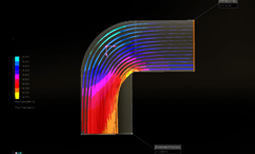 |
| Ballast | Ballast is additional weight added to an aircraft to maintain the proper center of gravity (CG) for safe and stable flight. It can take the form of lead plates, sandbags, or fuel adjustments. Proper CG balance ensures predictable control responses, preventing instability, excessive nose-up or nose-down tendencies, and potential loss of control. | 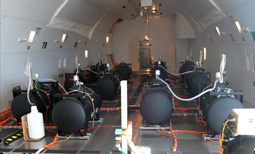 |
| Balloon | An unpowered lighter-than-air craft that remains aloft due to its buoyancy. Balloons can be free-floating or tethered to a fixed point. They are often used for meteorological observations, leisure flights, scientific experiments, and even surveillance. Hot air balloons rely on heated air, while gas balloons use lighter-than-air gases like helium or hydrogen. |  |
| Bank Angle | The bank angle is the measure of an aircraft’s lateral tilt relative to the horizontal plane during a turn. It is achieved by adjusting the ailerons to roll the aircraft. The greater the bank angle, the tighter the turn radius. Proper control of bank angle is essential for maintaining stability and coordinated flight. | 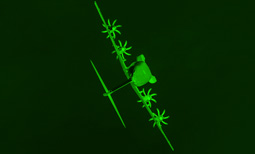 |
| Barometric Altimeter | A barometric altimeter measures altitude by sensing atmospheric pressure changes and comparing them to a standard pressure lapse rate. The instrument displays altitude based on preset atmospheric pressure conditions, which must be adjusted for accurate readings. It is a primary tool for maintaining flight levels and ensuring safe separation between aircraft. | 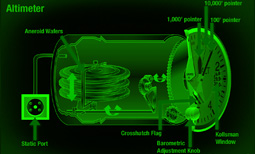 |
| Beacon | A beacon is a visual or electronic signal used for navigation and aircraft identification. Airports use rotating beacons to help pilots locate runways, while aircraft have anti-collision beacons to signal their presence. Navigational beacons, such as VORs and NDBs, provide crucial guidance for en-route and approach phases of flight. | 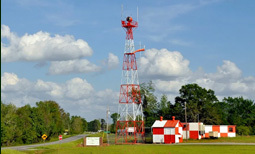 |
| Belly Landing | A belly landing is an emergency procedure in which an aircraft lands without deploying its landing gear. This can occur due to mechanical failure, hydraulic system malfunctions, or human error. Pilots perform controlled belly landings on suitable surfaces to minimize damage and increase the chances of safe evacuation for passengers and crew. | 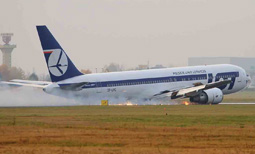 |
| Biplane | An aircraft with two wings stacked one above the other, commonly used in the early years of aviation. Biplanes provide increased lift, allowing for shorter takeoffs and greater maneuverability. However, they also generate higher drag, limiting speed. They were widely used in World War I, barnstorming, and aerobatic performances before monoplane designs became dominant. | 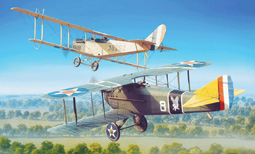 |
| Blade Tip | The blade tip is the outermost edge of a propeller or rotor blade, playing a critical role in aerodynamic efficiency, noise reduction, and performance. Blade tips are often designed with special shapes, such as swept or scimitar styles, to reduce drag, minimize noise, and improve thrust while preventing excessive vibration and stress. | 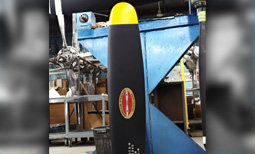 |
| Blancolirio (Juan Browne) | Blancolirio, led by Juan Browne, is a renowned aviation-focused YouTube channel delivering expert accident analysis, aviation news, and educational content. A veteran pilot, Browne translates complex investigations into clear, accessible reports for aviation professionals and the public alike. His work emphasizes safety, transparency, and real-time insights, making Blancolirio a trusted voice in the global aviation community. |  |
| Blended Wing | A blended wing design merges the fuselage and wings into a seamless aerodynamic structure, improving fuel efficiency and lift characteristics. This design reduces drag, enhances structural strength, and allows for larger internal cargo or fuel storage. It is commonly explored for futuristic aircraft and unmanned aerial vehicles (UAVs). | 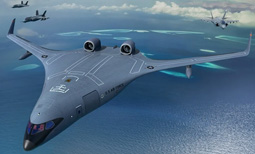 |
| Bleed Air | Compressed air taken from the compressor stage of a turbine engine, used for various purposes such as cabin pressurization and de-icing. Bleed air is essential for starting engines, operating air conditioning systems, and preventing ice buildup on wings and engine intakes. It must be carefully regulated to ensure safe and efficient aircraft operation. | 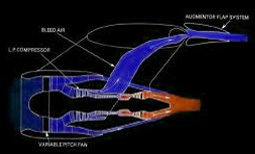 |
|
USN Flight Demonstration Team Blue Angels 
|
The
United States Navy Blue Angels
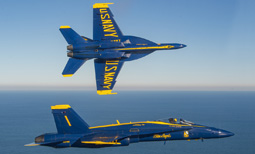
operating out of NAS Pensacola, Florida , was established in 1946, and are the U.S. Navy's flight demonstration squadron and the world's second-oldest formal aerobatic team. Comprising six Navy and one Marine Corps pilots, they fly Boeing F/A-18 Super Hornets and a Lockheed Martin C-130J Super Hercules. Performing dazzling aerial displays, they showcase naval aviation excellence and have captivated millions globally. |
|
| Bogey | An unidentified aircraft detected by radar or visually, whose intentions are unknown. Bogeys must be quickly identified to determine whether they pose a threat. Military pilots use interception procedures to visually identify unknown aircraft, while air traffic controllers monitor bogeys closely until identification is confirmed through communication or additional radar tracking. | 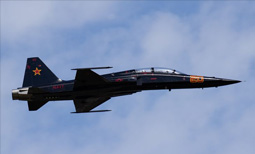 |
| Bombardier | A crew member responsible for aiming and releasing bombs from an aircraft. Bombardiers played a crucial role in strategic bombing missions, using advanced sights and calculations to ensure accuracy. Modern aircraft use precision-guided munitions, but early bombardiers relied on mechanical bomb sights, wind calculations, and altitude adjustments to hit designated targets. | 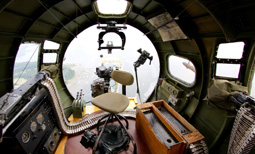 |
| Boom | A boom is a structural extension of an aircraft that supports key components such as the tail assembly, radar equipment, or refueling systems. In twin-boom designs, it enhances stability by distributing aerodynamic forces. Some military aircraft use booms for aerial refueling, allowing them to extend range by transferring fuel in flight. | 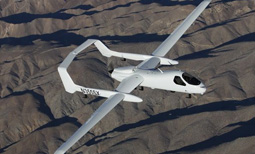 |
| Boundary Layer | The boundary layer is the thin layer of air that exists adjacent to the surface of an aircraft’s wing or fuselage, where the airflow transitions from zero velocity at the surface to the free stream velocity of the surrounding air. This layer significantly impacts aerodynamic performance, drag, and lift. Engineers and aerodynamicists study its behavior to enhance efficiency and minimize turbulence or separation, which can lead to increased drag or reduced lift. | 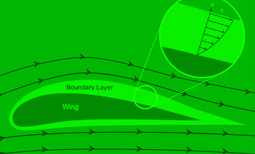 |
| Brake Horsepower | Brake horsepower (BHP) is a measure of an engine’s power output before accounting for losses due to auxiliary components like the gearbox or alternator. It indicates the usable power available for propulsion. Aircraft engines are rated by BHP to determine their capacity to generate thrust and support flight operations effectively. |  |
| Briefing | A briefing is a structured session where pilots, crew members, and relevant personnel receive critical information before a flight. It typically includes discussions on weather conditions, flight plans, alternate airports, emergency procedures, fuel calculations, and any operational considerations. Pre-flight briefings ensure that all crew members are aligned with safety protocols, roles, and responsibilities, contributing to efficient and coordinated flight operations. | 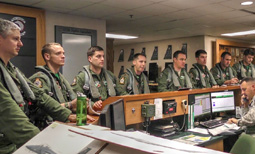 |
| Buffet | Buffet refers to the aerodynamic shaking or oscillation of an aircraft’s structure due to turbulent airflow, commonly occurring near stall conditions. It results from the separation of airflow over the wings, causing fluctuations in lift and pressure. Pilots experience buffet as a warning sign of an impending stall, and it plays a crucial role in understanding aircraft performance limits. Excessive buffet can impact control effectiveness and lead to structural fatigue if prolonged. | 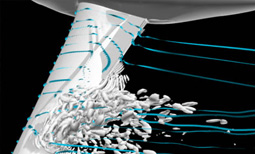 |
| Buffeting | Buffeting is the rapid vibration or shaking of an aircraft’s structure caused by turbulent airflow or aerodynamic forces. It often occurs when an aircraft approaches stall conditions, high-speed flight limits, or turbulent wake zones. Understanding and mitigating buffeting is crucial for maintaining control and preventing excessive structural stress or fatigue. | 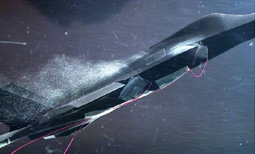 |
| Bulk Cargo | Bulk cargo refers to unpackaged goods transported in large quantities within specialized aircraft compartments. This can include raw materials like grain, coal, liquids, or industrial supplies. Cargo aircraft designed for bulk transport have reinforced floors, adjustable restraints, and specialized handling systems to secure and distribute loads evenly during flight. | 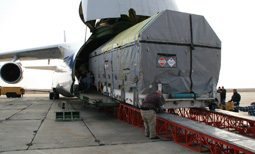 |
| Bulkhead | A bulkhead is a vertical partition or structural wall within an aircraft, designed to reinforce structural integrity and separate different sections of the aircraft. It serves multiple purposes, including enhancing the fuselage’s strength, providing pressurization boundaries, and improving fire containment. Bulkheads can be found in passenger cabins, cargo holds, and cockpit areas, ensuring safety and operational efficiency by distributing loads and reinforcing the airframe. | 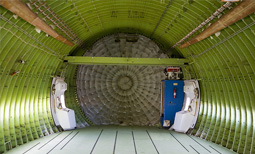 |
| Bus | A bus in an aircraft’s electrical system is a crucial distribution network that delivers electrical power to various subsystems and components. It ensures that essential avionics, lighting, and flight control systems receive power from primary or backup sources. Buses can be categorized into essential, primary, and emergency buses, prioritizing critical systems in case of electrical failure. Proper management of the electrical bus system is vital for maintaining flight safety and operational reliability. | 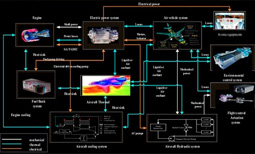 |
| Bypass Duct | A bypass duct in a turbofan engine directs airflow around the engine core, increasing efficiency and reducing noise. This feature is key to high-bypass turbofan engines, which use a significant portion of incoming air for thrust rather than combustion. The bypass airflow contributes to fuel economy and lower environmental emissions. | 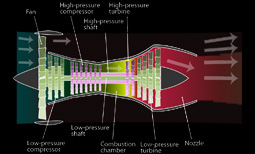 |
| Bypass Ratio | The bypass ratio in a turbofan engine is the ratio of the mass of air that bypasses the engine core to the mass of air passing through the core. A higher bypass ratio typically results in greater fuel efficiency and lower noise levels, making high-bypass turbofan engines ideal for commercial airliners and modern transport aircraft. | 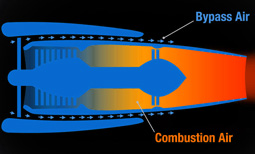 |
