ASX Glossary - F: Difference between revisions
Jump to navigation
Jump to search
No edit summary |
No edit summary |
||
| Line 148: | Line 148: | ||
</head> | </head> | ||
<body> | <body> | ||
<table> | |||
<tr id=" | <tr id="faa"> | ||
<td class="term" style="text-align: center;"> | <td class="term" style="text-align: center;"> | ||
<a href="https://wiki.alsresume.com/index.php?title= | <a href="https://wiki.alsresume.com/index.php?title=Federal_Aviation_Administration" | ||
style=" | style="text-decoration: none; color: inherit;"> | ||
<span style="color: #40E0D0 !important; font-weight: bold;">Federal Aviation Administration (FAA)</span><br> | |||
<img src="https://www.alsresume.com/wp-content/uploads/2025/03/FAA-Logo.png" | |||
alt="FAA Logo" | |||
style="display: block; margin: 10px auto; width: 80px; height: auto;"> | |||
</a> | |||
</td> | </td> | ||
<td class="description"> | <td class="description"> | ||
The <a href="https://www. | The | ||
style="color: # | <a href="https://www.faa.gov/" target="_blank" | ||
onmouseover="this.style.color='#ff4f01';" | style="color: #f1b11b !important; font-size: 1em; text-decoration: none; cursor: pointer;" | ||
onmouseout="this.style.color='# | onmouseover="this.style.color='#ff4f01';" | ||
onmouseout="this.style.color='#f1b11b'; this.style.setProperty('color', '#f1b11b', 'important');" | |||
</a> | onfocus="this.style.color='#f1b11b'; this.style.setProperty('color', '#f1b11b', 'important');" | ||
< | onblur="this.style.color='#f1b11b'; this.style.setProperty('color', '#f1b11b', 'important');"> | ||
Federal Aviation Administration (FAA) | |||
</a> operating out of | |||
<a href="https://www.google.com/maps/place/38%C2%B053%2713.09%22N+77%C2%B001%2722.69%22W/@38.886969,-77.022969,17z" | |||
target="_blank" | |||
</ | style="color: #f1b11b !important; font-size: 1em; text-decoration: none; cursor: pointer;" | ||
onmouseover="this.style.color='#ff4f01';" | |||
onmouseout="this.style.color='#f1b11b'; this.style.setProperty('color', '#f1b11b', 'important');" | |||
onfocus="this.style.color='#f1b11b'; this.style.setProperty('color', '#f1b11b', 'important');" | |||
onblur="this.style.color='#f1b11b'; this.style.setProperty('color', '#f1b11b', 'important');"> | |||
Orville Wright Federal Building, 800 Independence Avenue SW, Washington, D.C., 20591 | |||
</a>, (866) 835-5322, is a U.S. government agency under the Department of Transportation, responsible for regulating all aspects of civil aviation. It oversees air traffic control, aircraft certification, pilot licensing, airport development, and the safe integration of commercial space and unmanned aircraft. Founded in 1958, the FAA ensures aviation safety, enforces regulations, promotes efficiency, and supports advancements in aerospace systems and technologies throughout the National Airspace System. | |||
</td> | </td> | ||
<td class="image-column"> | <td class="image-column"> | ||
<img src="https://www.alsresume.com/wp-content/uploads/2025/03/ | <img src="https://www.alsresume.com/wp-content/uploads/2025/03/FAA-1.jpg" alt="FAA"> | ||
</td> | </td> | ||
</tr> | </tr> | ||
<tr | |||
<tr> | |||
<td class="term"> | <td class="term"> | ||
<a href="https://wiki.alsresume.com/index.php?title= | <a href="https://wiki.alsresume.com/index.php?title=FADEC" target="_blank" | ||
style="color: #40E0D0; font-weight: bold; text-decoration: none; cursor: pointer;" | style="color: #40E0D0; font-weight: bold; text-decoration: none; cursor: pointer;" | ||
onmouseover="this.style.color='#ff4f01';" | onmouseover="this.style.color='#ff4f01';" | ||
onmouseout="this.style.color='#40E0D0';"> | onmouseout="this.style.color='#40E0D0';">FADEC (Full Authority Digital Engine Control) | ||
</a> | </a> | ||
</td> | </td> | ||
<td class="description"> | <td class="description">FADEC is an advanced electronic system that automatically controls an aircraft's engine functions, optimizing fuel efficiency and performance. It eliminates the need for manual throttle adjustments by pilots, ensuring precise control over thrust, reducing pilot workload, and improving engine reliability while preventing operating conditions outside safe performance limits.</td> | ||
<td class="image-column"><img src="https://www.alsresume.com/wp-content/uploads/2025/02/FADEC.jpg" alt="FADEC (Full Authority Digital Engine Control)"></td> | |||
<td class="image-column"> | |||
</tr> | </tr> | ||
<tr | <tr> | ||
<td class="term"> | <td class="term"> | ||
<a href="https://wiki.alsresume.com/index.php?title= | <a href="https://wiki.alsresume.com/index.php?title=Sensory_illusions_in_aviation" target="_blank" | ||
style="color: #40E0D0; font-weight: bold; text-decoration: none; cursor: pointer;" | style="color: #40E0D0; font-weight: bold; text-decoration: none; cursor: pointer;" | ||
onmouseover="this.style.color='#ff4f01';" | onmouseover="this.style.color='#ff4f01';" | ||
onmouseout="this.style.color='#40E0D0';"> | onmouseout="this.style.color='#40E0D0';">False Horizon | ||
</a> | </a> | ||
</td> | </td> | ||
<td class="description"> | <td class="description">A visual illusion where a misleading reference point, such as clouds or terrain, causes a pilot to misinterpret the actual horizon. This can lead to spatial disorientation, especially at night or in poor visibility. Pilots rely on attitude indicators and flight instruments to counteract false horizon illusions.</td> | ||
<td class="image-column"><img src="https://www.alsresume.com/wp-content/uploads/2025/02/False-Horizon.jpg" alt="False Horizon"></td> | |||
<td class="image-column"> | |||
</tr> | </tr> | ||
<tr | <tr> | ||
<td class="term"> | <td class="term"> | ||
<a href="https://wiki.alsresume.com/index.php?title= | <a href="https://wiki.alsresume.com/index.php?title=Turbofan_Blade" target="_blank" | ||
style="color: #40E0D0; font-weight: bold; text-decoration: none; cursor: pointer;" | style="color: #40E0D0; font-weight: bold; text-decoration: none; cursor: pointer;" | ||
onmouseover="this.style.color='#ff4f01';" | onmouseover="this.style.color='#ff4f01';" | ||
onmouseout="this.style.color='#40E0D0';"> | onmouseout="this.style.color='#40E0D0';">Fan Blade | ||
</a> | </a> | ||
</td> | </td> | ||
<td class="description"> | <td class="description">A key component of a turbofan engine, fan blades draw in and compress air to generate thrust. Modern fan blades are made from lightweight composite materials to maximize efficiency, reduce noise, and improve fuel consumption. Their design significantly impacts an engine's performance and durability.</td> | ||
<td class="image-column"><img src="https://www.alsresume.com/wp-content/uploads/2025/02/Fan-Blade.jpg" alt="Fan Blade"></td> | |||
<td class="image-column"> | |||
</tr> | </tr> | ||
<tr | <tr> | ||
<td class="term"> | <td class="term"> | ||
<a href="https://wiki.alsresume.com/index.php?title= | <a href="https://wiki.alsresume.com/index.php?title=Federal_Aviation_Regulations" target="_blank" | ||
style="color: #40E0D0; font-weight: bold; text-decoration: none; cursor: pointer;" | style="color: #40E0D0; font-weight: bold; text-decoration: none; cursor: pointer;" | ||
onmouseover="this.style.color='#ff4f01';" | onmouseover="this.style.color='#ff4f01';" | ||
onmouseout="this.style.color='#40E0D0';"> | onmouseout="this.style.color='#40E0D0';">FAR (Federal Aviation Regulations) | ||
</a> | </a> | ||
</td> | </td> | ||
<td class="description"> | <td class="description">A set of rules established by the Federal Aviation Administration (FAA) governing all aspects of civil aviation in the U.S. These regulations cover aircraft certification, flight operations, pilot licensing, air traffic management, and maintenance requirements, ensuring safe and standardized aviation practices.</td> | ||
<td class="image-column"><img src="https://www.alsresume.com/wp-content/uploads/2025/02/FAR.jpg" alt="FAR (Federal Aviation Regulations)"></td> | |||
<td class="image-column"> | |||
</tr> | </tr> | ||
<tr | <tr> | ||
<td class="term"> | <td class="term"> | ||
<a href="https://wiki.alsresume.com/index.php?title= | <a href="https://wiki.alsresume.com/index.php?title=Fatigue_(Aircraft_Structure)" target="_blank" | ||
style="color: #40E0D0; font-weight: bold; text-decoration: none; cursor: pointer;" | style="color: #40E0D0; font-weight: bold; text-decoration: none; cursor: pointer;" | ||
onmouseover="this.style.color='#ff4f01';" | onmouseover="this.style.color='#ff4f01';" | ||
onmouseout="this.style.color='#40E0D0';"> | onmouseout="this.style.color='#40E0D0';">Fatigue (Aircraft Structure) | ||
</a> | </a> | ||
</td> | </td> | ||
<td class="description"> | <td class="description">A weakening of aircraft materials due to repetitive stress cycles over time. Structural fatigue can lead to cracks and potential failures, necessitating regular inspections and maintenance to detect early signs of wear. Aircraft manufacturers design components with fatigue resistance to extend operational lifespan.</td> | ||
<td class="image-column"><img src="https://www.alsresume.com/wp-content/uploads/2025/02/Fatigue.jpg" alt="Fatigue (Aircraft Structure)"></td> | |||
<td class="image-column"> | |||
</tr> | </tr> | ||
<tr | <tr> | ||
<td class="term"> | <td class="term"> | ||
<a href="https://wiki.alsresume.com/index.php?title= | <a href="https://wiki.alsresume.com/index.php?title=Propeller_(aeronautics)#Feathering" target="_blank" | ||
style="color: #40E0D0; font-weight: bold; text-decoration: none; cursor: pointer;" | style="color: #40E0D0; font-weight: bold; text-decoration: none; cursor: pointer;" | ||
onmouseover="this.style.color='#ff4f01';" | onmouseover="this.style.color='#ff4f01';" | ||
onmouseout="this.style.color='#40E0D0';"> | onmouseout="this.style.color='#40E0D0';">Feathering (Propeller) | ||
</a> | </a> | ||
</td> | </td> | ||
<td class="description"> | <td class="description">A procedure in which a propeller's blades are adjusted to a high angle to minimize drag in case of engine failure. This is commonly used in multi-engine aircraft to reduce resistance and allow continued flight using the remaining operational engine(s).</td> | ||
<td class="image-column"><img src="https://www.alsresume.com/wp-content/uploads/2025/02/Feather.jpg" alt="Feathering (Propeller)"></td> | |||
<td class="image-column"> | |||
</tr> | </tr> | ||
<tr> | <tr> | ||
<td class="term"> | <td class="term"> | ||
<a href="https://wiki.alsresume.com/index.php?title= | <a href="https://wiki.alsresume.com/index.php?title=Ferry_flying" target="_blank" | ||
style="color: #40E0D0; font-weight: bold; text-decoration: none; cursor: pointer;" | style="color: #40E0D0; font-weight: bold; text-decoration: none; cursor: pointer;" | ||
onmouseover="this.style.color='#ff4f01';" | onmouseover="this.style.color='#ff4f01';" | ||
onmouseout="this.style.color='#40E0D0';"> | onmouseout="this.style.color='#40E0D0';">>Ferry Flight | ||
</a> | </a> | ||
</td> | </td> | ||
<td class="description">A | <td class="description">A non-revenue flight conducted to relocate an aircraft for maintenance, delivery, or repositioning purposes. It may operate with reduced crew and minimal fuel, depending on its purpose. Ferry flights do not carry passengers unless specifically authorized.</td> | ||
<td class="image-column"><img src="https://www.alsresume.com/wp-content/uploads/2025/02/ | <td class="image-column"><img src="https://www.alsresume.com/wp-content/uploads/2025/02/Ferry.jpg" alt="Ferry Flight"></td> | ||
</tr> | </tr> | ||
<tr | <tr> | ||
<td class="term"> | <td class="term"> | ||
<a href="https://wiki.alsresume.com/index.php?title= | <a href="https://wiki.alsresume.com/index.php?title=Final_approach" target="_blank" | ||
style="color: #40E0D0; font-weight: bold; text-decoration: none; cursor: pointer;" | style="color: #40E0D0; font-weight: bold; text-decoration: none; cursor: pointer;" | ||
onmouseover="this.style.color='#ff4f01';" | onmouseover="this.style.color='#ff4f01';" | ||
onmouseout="this.style.color='#40E0D0';"> | onmouseout="this.style.color='#40E0D0';">Final Approach | ||
</a> | </a> | ||
</td> | </td> | ||
<td class="description"> | <td class="description">The last segment of an aircraft’s approach before landing, extending from the final approach fix to the runway threshold. Pilots align with the centerline and descend according to glide path indications, ensuring a smooth and controlled touchdown.</td> | ||
<td class="image-column"><img src="https://www.alsresume.com/wp-content/uploads/2025/02/Final.jpg" alt="Final Approach"></td> | |||
<td class="image-column"> | |||
</tr> | </tr> | ||
<tr | <tr> | ||
<td class="term"> | <td class="term"> | ||
<a href="https://wiki.alsresume.com/index.php?title= | <a href="https://wiki.alsresume.com/index.php?title=Aircraft_Fire_Detection_System" target="_blank" | ||
style="color: #40E0D0; font-weight: bold; text-decoration: none; cursor: pointer;" | style="color: #40E0D0; font-weight: bold; text-decoration: none; cursor: pointer;" | ||
onmouseover="this.style.color='#ff4f01';" | onmouseover="this.style.color='#ff4f01';" | ||
onmouseout="this.style.color='#40E0D0';"> | onmouseout="this.style.color='#40E0D0';">Fire Detection System | ||
</a> | </a> | ||
</td> | </td> | ||
<td class="description"> | <td class="description">A safety system installed in aircraft to detect and alert pilots of potential fires in the engine, cargo compartments, or cabin. It consists of sensors, alarms, and extinguishing mechanisms to mitigate fire risks and enhance passenger safety.</td> | ||
<td class="image-column"><img src="https://www.alsresume.com/wp-content/uploads/2025/02/Fire.jpg" alt="Fire Detection System"></td> | |||
<td class="image-column"> | |||
</tr> | </tr> | ||
<tr | <tr> | ||
<td class="term"> | <td class="term"> | ||
<a href="https://wiki.alsresume.com/index.php?title= | <a href="https://wiki.alsresume.com/index.php?title=Firewall_(engine)" target="_blank" | ||
style="color: #40E0D0; font-weight: bold; text-decoration: none; cursor: pointer;" | style="color: #40E0D0; font-weight: bold; text-decoration: none; cursor: pointer;" | ||
onmouseover="this.style.color='#ff4f01';" | onmouseover="this.style.color='#ff4f01';" | ||
onmouseout="this.style.color='#40E0D0';"> | onmouseout="this.style.color='#40E0D0';">Firewall | ||
</a> | </a> | ||
</td> | </td> | ||
<td class="description"> | <td class="description">A heat-resistant barrier between an aircraft’s engine compartment and cockpit or fuselage. It protects occupants from engine fires by containing flames and preventing heat transfer. Firewalls are made of specialized materials designed to withstand extreme temperatures.</td> | ||
<td class="image-column"><img src="https://www.alsresume.com/wp-content/uploads/2025/02/Firewall.jpg" alt="Firewall"></td> | |||
<td class="image-column"> | |||
</tr> | </tr> | ||
<tr | <tr> | ||
<td class="term"> | <td class="term"> | ||
<a href="https://wiki.alsresume.com/index.php?title= | <a href="https://wiki.alsresume.com/index.php?title=Flameout" target="_blank" | ||
style="color: #40E0D0; font-weight: bold; text-decoration: none; cursor: pointer;" | style="color: #40E0D0; font-weight: bold; text-decoration: none; cursor: pointer;" | ||
onmouseover="this.style.color='#ff4f01';" | onmouseover="this.style.color='#ff4f01';" | ||
onmouseout="this.style.color='#40E0D0';"> | onmouseout="this.style.color='#40E0D0';">Flameout | ||
</a> | </a> | ||
</td> | </td> | ||
<td class="description"> | <td class="description">A condition where an aircraft engine unexpectedly shuts down due to fuel starvation, compressor stall, or severe weather. Pilots are trained in restart procedures, but some flameouts may require an emergency landing if engine relight is unsuccessful.</td> | ||
<td class="image-column"><img src="https://www.alsresume.com/wp-content/uploads/2025/02/Flameout.jpg" alt="Flameout"></td> | |||
<td class="image-column"> | |||
</tr> | </tr> | ||
<tr | <tr> | ||
<td class="term"> | <td class="term"> | ||
<a href="https:// | <a href="https://wiki.alsresume.com/index.php?title=Flap_(aeronautics)" target="_blank" | ||
style="color: #40E0D0; font-weight: bold; text-decoration: none; cursor: pointer;" | style="color: #40E0D0; font-weight: bold; text-decoration: none; cursor: pointer;" | ||
onmouseover="this.style.color='#ff4f01';" | onmouseover="this.style.color='#ff4f01';" | ||
onmouseout="this.style.color='#40E0D0';"> | onmouseout="this.style.color='#40E0D0';">Flaps | ||
</a> | </a> | ||
</td> | </td> | ||
<td class="description"> | <td class="description">Hinged surfaces on an aircraft’s wings that extend downward to increase lift and drag during takeoff and landing. Flaps allow for slower approach speeds, shorter landing distances, and improved low-speed handling.</td> | ||
<td class="image-column"><img src="https://www.alsresume.com/wp-content/uploads/2025/02/Flaps-1.jpg" alt="Flaps"></td> | |||
</tr> | |||
<td class="image-column"> | <tr> | ||
<td class="term">Flight Control System</td> | |||
<td class="description">A collection of mechanical and electronic components that allow pilots to maneuver an aircraft. These include ailerons, rudders, and elevators, which control roll, yaw, and pitch.</td> | |||
<td class="image-column"><img src="https://www.alsresume.com/wp-content/uploads/2025/02/Flight-Control-Systems.jpg" alt="Flight Control System"></td> | |||
</tr> | </tr> | ||
<tr | <tr> | ||
<td class="term"> | <td class="term"> | ||
<a href="https://wiki.alsresume.com/index.php?title= | <a href="https://wiki.alsresume.com/index.php?title=Flight_recorder" target="_blank" | ||
style="color: #40E0D0; font-weight: bold; text-decoration: none; cursor: pointer;" | style="color: #40E0D0; font-weight: bold; text-decoration: none; cursor: pointer;" | ||
onmouseover="this.style.color='#ff4f01';" | onmouseover="this.style.color='#ff4f01';" | ||
onmouseout="this.style.color='#40E0D0';"> | onmouseout="this.style.color='#40E0D0';">Flight Data Recorder (FDR) | ||
</a> | </a> | ||
</td> | </td> | ||
<td class="description"> | <td class="description">Also known as the "black box," the FDR records crucial flight parameters such as altitude, speed, heading, and engine performance. It is used in accident investigations to determine causes and improve aviation safety.</td> | ||
<td class="image-column"><img src="https://www.alsresume.com/wp-content/uploads/2025/02/Flight-Data-Recorder.jpg" alt="Flight Data Recorder (FDR)"></td> | |||
<td class="image-column"> | |||
</tr> | </tr> | ||
<tr | <tr> | ||
<td class="term"> | <td class="term"> | ||
<a href="https://wiki.alsresume.com/index.php?title= | <a href="https://wiki.alsresume.com/index.php?title=Flight_envelope" target="_blank" | ||
style="color: #40E0D0; font-weight: bold; text-decoration: none; cursor: pointer;" | style="color: #40E0D0; font-weight: bold; text-decoration: none; cursor: pointer;" | ||
onmouseover="this.style.color='#ff4f01';" | onmouseover="this.style.color='#ff4f01';" | ||
onmouseout="this.style.color='#40E0D0';"> | onmouseout="this.style.color='#40E0D0';">Flight Envelope | ||
</a> | </a> | ||
</td> | </td> | ||
<td class="description"> | <td class="description">The operational limits of an aircraft, including maximum speed, altitude, and maneuverability. Exceeding the flight envelope can lead to structural damage, loss of control, or aerodynamic stall.</td> | ||
<td class="image-column"><img src="https://www.alsresume.com/wp-content/uploads/2025/02/Exceedance.jpg" alt="Flight Envelope"></td> | |||
<td class="image-column"> | |||
</tr> | </tr> | ||
<tr | <tr> | ||
<td class="term"> | <td class="term"> | ||
<a href="https://wiki.alsresume.com/index.php?title= | <a href="https://wiki.alsresume.com/index.php?title=Flight_level" target="_blank" | ||
style="color: #40E0D0; font-weight: bold; text-decoration: none; cursor: pointer;" | style="color: #40E0D0; font-weight: bold; text-decoration: none; cursor: pointer;" | ||
onmouseover="this.style.color='#ff4f01';" | onmouseover="this.style.color='#ff4f01';" | ||
onmouseout="this.style.color='#40E0D0';"> | onmouseout="this.style.color='#40E0D0';">Flight Level (FL) | ||
</a> | </a> | ||
</td> | </td> | ||
<td class="description"> | <td class="description">A standard altitude reference in aviation, expressed in hundreds of feet. For example, FL350 represents 35,000 feet above mean sea level. Flight levels simplify communication and air traffic control coordination, particularly in high-altitude operations.</td> | ||
<td class="image-column"><img src="https://www.alsresume.com/wp-content/uploads/2025/02/Flight-Level.jpg" alt="Flight Level (FL)"></td> | |||
<td class="image-column"> | |||
</tr> | </tr> | ||
<tr | <tr> | ||
<td class="term"> | <td class="term"> | ||
<a href="https://wiki.alsresume.com/index.php?title= | <a href="https://wiki.alsresume.com/index.php?title=Flight_management_system" target="_blank" | ||
style="color: #40E0D0; font-weight: bold; text-decoration: none; cursor: pointer;" | style="color: #40E0D0; font-weight: bold; text-decoration: none; cursor: pointer;" | ||
onmouseover="this.style.color='#ff4f01';" | onmouseover="this.style.color='#ff4f01';" | ||
onmouseout="this.style.color='#40E0D0';"> | onmouseout="this.style.color='#40E0D0';">Flight Management System (FMS) | ||
</a> | </a> | ||
</td> | </td> | ||
<td class="description"> | <td class="description">A computerized system that automates navigation, flight planning, and performance management. FMS reduces pilot workload by integrating GPS, autopilot, and onboard sensors, optimizing fuel efficiency and route planning.</td> | ||
<td class="image-column"><img src="https://www.alsresume.com/wp-content/uploads/2025/02/Flight-Management.jpg" alt="Flight Management System (FMS)"></td> | |||
<td class="image-column"> | |||
</tr> | </tr> | ||
<tr | <tr> | ||
<td class="term"> | <td class="term"> | ||
<a href="https://wiki.alsresume.com/index.php?title= | <a href="https://wiki.alsresume.com/index.php?title=Airway_(aviation)" target="_blank" | ||
style="color: #40E0D0; font-weight: bold; text-decoration: none; cursor: pointer;" | style="color: #40E0D0; font-weight: bold; text-decoration: none; cursor: pointer;" | ||
onmouseover="this.style.color='#ff4f01';" | onmouseover="this.style.color='#ff4f01';" | ||
onmouseout="this.style.color='#40E0D0';"> | onmouseout="this.style.color='#40E0D0';">Flight Path | ||
</a> | </a> | ||
</td> | </td> | ||
<td class="description"> | <td class="description">The actual trajectory an aircraft follows during flight, which may differ from the planned route due to weather, air traffic control instructions, or turbulence. Maintaining a stable flight path is essential for safety.</td> | ||
<td class="image-column"><img src="https://www.alsresume.com/wp-content/uploads/2025/02/Flight-Path.jpg" alt="Flight Path"></td> | |||
<td class="image-column"> | |||
</tr> | </tr> | ||
<tr | <tr> | ||
<td class="term"> | <td class="term"> | ||
<a href="https://wiki.alsresume.com/index.php?title= | <a href="https://wiki.alsresume.com/index.php?title=Flight_plan" target="_blank" | ||
style="color: #40E0D0; font-weight: bold; text-decoration: none; cursor: pointer;" | style="color: #40E0D0; font-weight: bold; text-decoration: none; cursor: pointer;" | ||
onmouseover="this.style.color='#ff4f01';" | onmouseover="this.style.color='#ff4f01';" | ||
onmouseout="this.style.color='#40E0D0';"> | onmouseout="this.style.color='#40E0D0';">Flight Plan | ||
</a> | </a> | ||
</td> | </td> | ||
<td class="description"> | <td class="description">A detailed document submitted to air traffic control outlining an aircraft’s intended route, altitude, estimated time of arrival, and fuel requirements. Flight plans enhance safety and coordination within controlled airspace.</td> | ||
<td class="image-column"><img src="https://www.alsresume.com/wp-content/uploads/2025/02/Flight-Plan.jpg" alt="Flight Plan"></td> | |||
<td class="image-column"> | |||
</tr> | </tr> | ||
<tr | <tr> | ||
<td class="term"> | <td class="term"> | ||
<a href="https://wiki.alsresume.com/index.php?title= | <a href="https://wiki.alsresume.com/index.php?title=Flight_time" target="_blank" | ||
style="color: # | style="color: #40E0D0; font-weight: bold; text-decoration: none; cursor: pointer;" | ||
onmouseover="this.style.color='#ff4f01';" | onmouseover="this.style.color='#ff4f01';" | ||
onmouseout="this.style.color='# | onmouseout="this.style.color='#40E0D0';">Flight Time | ||
</a> | </a> | ||
</td> | </td> | ||
<td class="description"> | <td class="description">The total duration from an aircraft’s takeoff to landing. Flight time is used for pilot logbooks, aircraft maintenance tracking, and regulatory compliance with duty-hour limits.</td> | ||
<td class="image-column"><img src="https://www.alsresume.com/wp-content/uploads/2025/02/Flight-Time.jpg" alt="Flight Time"></td> | |||
<td class="image-column"> | |||
</tr> | </tr> | ||
<tr | <tr> | ||
<td class="term"> | <td class="term"> | ||
<a href="https://wiki.alsresume.com/index.php?title= | <a href="https://wiki.alsresume.com/index.php?title=Instrument_flight_rules" target="_blank" | ||
style="color: #40E0D0; font-weight: bold; text-decoration: none; cursor: pointer;" | style="color: #40E0D0; font-weight: bold; text-decoration: none; cursor: pointer;" | ||
onmouseover="this.style.color='#ff4f01';" | onmouseover="this.style.color='#ff4f01';" | ||
onmouseout="this.style.color='#40E0D0';"> | onmouseout="this.style.color='#40E0D0';">Flight Visibility | ||
</a> | </a> | ||
</td> | </td> | ||
<td class="description"> | <td class="description">The distance at which a pilot can clearly see and identify objects outside the cockpit. Flight visibility is affected by weather conditions, haze, and atmospheric factors, impacting approach and landing decisions.</td> | ||
<td class="image-column"><img src="https://www.alsresume.com/wp-content/uploads/2025/02/Flight-Visibility.jpg" alt="Flight Visibility"></td> | |||
<td class="image-column"> | |||
</tr> | </tr> | ||
<tr | <tr> | ||
<td class="term"> | <td class="term"> | ||
<a href="https://wiki.alsresume.com/index.php?title= | <a href="https://wiki.alsresume.com/index.php?title=Floatplane" target="_blank" | ||
style="color: #40E0D0; font-weight: bold; text-decoration: none; cursor: pointer;" | style="color: #40E0D0; font-weight: bold; text-decoration: none; cursor: pointer;" | ||
onmouseover="this.style.color='#ff4f01';" | onmouseover="this.style.color='#ff4f01';" | ||
onmouseout="this.style.color='#40E0D0';"> | onmouseout="this.style.color='#40E0D0';">Floatplane | ||
</a> | </a> | ||
</td> | </td> | ||
<td class="description"> | <td class="description">An aircraft equipped with pontoons or floats instead of wheels, allowing it to take off and land on water. Floatplanes are commonly used for remote access, tourism, and seaplane operations.</td> | ||
<td class="image-column"><img src="https://www.alsresume.com/wp-content/uploads/2025/02/Floatplane.jpg" alt="Floatplane"></td> | |||
<td class="image-column"> | |||
</tr> | </tr> | ||
<tr | <tr> | ||
<td class="term"> | <td class="term"> | ||
<a href="https://wiki.alsresume.com/index.php?title= | <a href="https://wiki.alsresume.com/index.php?title=Fly-by-wire" target="_blank" | ||
style="color: #40E0D0; font-weight: bold; text-decoration: none; cursor: pointer;" | style="color: #40E0D0; font-weight: bold; text-decoration: none; cursor: pointer;" | ||
onmouseover="this.style.color='#ff4f01';" | onmouseover="this.style.color='#ff4f01';" | ||
onmouseout="this.style.color='#40E0D0';"> | onmouseout="this.style.color='#40E0D0';">Fly-by-Wire (FBW) | ||
</a> | </a> | ||
</td> | </td> | ||
<td class="description"> | <td class="description">A digital flight control system that replaces mechanical linkages with electronic signals. FBW systems enhance maneuverability, safety, and automation by processing pilot inputs through computers that adjust flight surfaces in real-time.</td> | ||
<td class="image-column"><img src="https://www.alsresume.com/wp-content/uploads/2025/02/Fly-by-wire.jpg" alt="Fly-by-Wire (FBW)"></td> | |||
<td class="image-column"> | |||
</tr> | </tr> | ||
<tr> | |||
<td class="term"> | <td class="term"> | ||
<a href="https://wiki.alsresume.com/index.php?title= | <a href="https://wiki.alsresume.com/index.php?title=Fog_Investigation_and_Dispersal_Operation" target="_blank" | ||
style="color: #40E0D0; font-weight: bold; text-decoration: none; cursor: pointer;" | style="color: #40E0D0; font-weight: bold; text-decoration: none; cursor: pointer;" | ||
onmouseover="this.style.color='#ff4f01';" | onmouseover="this.style.color='#ff4f01';" | ||
onmouseout="this.style.color='#40E0D0';"> | onmouseout="this.style.color='#40E0D0';">Fog Dispersal | ||
</a> | </a> | ||
</td> | </td> | ||
<td class="description"> | <td class="description">A technique used at airports to clear fog and improve visibility. Methods include using chemicals, heat, or aircraft-generated turbulence to disperse fog and facilitate safer landings.</td> | ||
<td class="image-column"><img src="https://www.alsresume.com/wp-content/uploads/2025/02/Fog-Dispersal.jpg" alt="Fog Dispersal"></td> | |||
<td class="image-column"> | |||
</tr> | </tr> | ||
<tr | <tr> | ||
<td class="term"> | <td class="term"> | ||
<a href="https://wiki.alsresume.com/index.php?title= | <a href="https://wiki.alsresume.com/index.php?title=Forced_landing" target="_blank" | ||
style="color: #40E0D0; font-weight: bold; text-decoration: none; cursor: pointer;" | style="color: #40E0D0; font-weight: bold; text-decoration: none; cursor: pointer;" | ||
onmouseover="this.style.color='#ff4f01';" | onmouseover="this.style.color='#ff4f01';" | ||
onmouseout="this.style.color='#40E0D0';"> | onmouseout="this.style.color='#40E0D0';">Forced Landing | ||
</a> | </a> | ||
</td> | </td> | ||
<td class="description"> | <td class="description">An emergency landing conducted due to engine failure, structural damage, or fuel exhaustion. Pilots choose the best available landing site to minimize risk and protect passengers.</td> | ||
<td class="image-column"><img src="https://www.alsresume.com/wp-content/uploads/2025/02/Forced-Landing.jpg" alt="Forced Landing"></td> | |||
<td class="image-column"> | |||
</tr> | </tr> | ||
<tr | <tr> | ||
<td class="term"> | <td class="term"> | ||
<a href="https://wiki.alsresume.com/index.php?title= | <a href="https://wiki.alsresume.com/index.php?title=Formation_flying" target="_blank" | ||
style="color: #40E0D0; font-weight: bold; text-decoration: none; cursor: pointer;" | style="color: #40E0D0; font-weight: bold; text-decoration: none; cursor: pointer;" | ||
onmouseover="this.style.color='#ff4f01';" | onmouseover="this.style.color='#ff4f01';" | ||
onmouseout="this.style.color='#40E0D0';"> | onmouseout="this.style.color='#40E0D0';">Formation Flight | ||
</a> | </a> | ||
</td> | </td> | ||
<td class="description"> | <td class="description">Multiple aircraft flying in a coordinated arrangement, often used in military operations, airshows, or training. Formation flight requires precise control and communication between pilots.</td> | ||
<td class="image-column"><img src="https://www.alsresume.com/wp-content/uploads/2025/02/Formation-Flying.jpg" alt="Formation Flight"></td> | |||
<td class="image-column"> | |||
</tr> | </tr> | ||
<tr | <tr> | ||
<td class="term"> | <td class="term"> | ||
<a href="https://wiki.alsresume.com/index.php?title= | <a href="https://wiki.alsresume.com/index.php?title=Fuel_dumping" target="_blank" | ||
style="color: #40E0D0; font-weight: bold; text-decoration: none; cursor: pointer;" | style="color: #40E0D0; font-weight: bold; text-decoration: none; cursor: pointer;" | ||
onmouseover="this.style.color='#ff4f01';" | onmouseover="this.style.color='#ff4f01';" | ||
onmouseout="this.style.color='#40E0D0';"> | onmouseout="this.style.color='#40E0D0';">Fuel Dumping | ||
</a> | </a> | ||
</td> | </td> | ||
<td class="description"> | <td class="description">The controlled release of fuel to reduce an aircraft’s weight before landing, typically used during emergency landings when an aircraft exceeds maximum landing weight.</td> | ||
<td class="image-column"><img src="https://www.alsresume.com/wp-content/uploads/2025/02/Fuel-Dumping.jpg" alt="Fuel Dumping"></td> | |||
<td class="image-column"> | |||
</tr> | </tr> | ||
<tr | <tr> | ||
<td class="term"> | <td class="term"> | ||
<a href="https://wiki.alsresume.com/index.php?title= | <a href="https://wiki.alsresume.com/index.php?title=Fuel_economy_in_aircraft" target="_blank" | ||
style="color: #40E0D0; font-weight: bold; text-decoration: none; cursor: pointer;" | style="color: #40E0D0; font-weight: bold; text-decoration: none; cursor: pointer;" | ||
onmouseover="this.style.color='#ff4f01';" | onmouseover="this.style.color='#ff4f01';" | ||
onmouseout="this.style.color='#40E0D0';"> | onmouseout="this.style.color='#40E0D0';">Fuel Efficiency | ||
</a> | </a> | ||
</td> | </td> | ||
<td class="description"> | <td class="description">A measure of how effectively an aircraft uses fuel to generate thrust. Fuel efficiency is influenced by aircraft design, altitude, speed, and weight management.</td> | ||
<td class="image-column"><img src="https://www.alsresume.com/wp-content/uploads/2025/02/Drag-1.jpg" alt="Fuel Efficiency"></td> | |||
<td class="image-column"> | |||
</tr> | </tr> | ||
<tr | <tr> | ||
<td class="term"> | <td class="term"> | ||
<a href="https://wiki.alsresume.com/index.php?title= | <a href="https://wiki.alsresume.com/index.php?title=Fuel_dumping" target="_blank" | ||
style="color: #40E0D0; font-weight: bold; text-decoration: none; cursor: pointer;" | style="color: #40E0D0; font-weight: bold; text-decoration: none; cursor: pointer;" | ||
onmouseover="this.style.color='#ff4f01';" | onmouseover="this.style.color='#ff4f01';" | ||
onmouseout="this.style.color='#40E0D0';"> | onmouseout="this.style.color='#40E0D0';">Fuel Jettison System | ||
</a> | </a> | ||
</td> | </td> | ||
<td class="description"> | <td class="description">A system that allows pilots to quickly release fuel in emergencies to reduce landing weight and improve aircraft maneuverability.</td> | ||
<td class="image-column"><img src="https://www.alsresume.com/wp-content/uploads/2025/02/Fuel-Jettison.jpg" alt="Fuel Jettison System"></td> | |||
<td class="image-column"> | |||
</tr> | </tr> | ||
<tr | <tr> | ||
<td class="term"> | <td class="term"> | ||
<a href="https://wiki.alsresume.com/index.php?title= | <a href="https://wiki.alsresume.com/index.php?title=Fuselage" target="_blank" | ||
style="color: #40E0D0; font-weight: bold; text-decoration: none; cursor: pointer;" | style="color: #40E0D0; font-weight: bold; text-decoration: none; cursor: pointer;" | ||
onmouseover="this.style.color='#ff4f01';" | onmouseover="this.style.color='#ff4f01';" | ||
onmouseout="this.style.color='#40E0D0';"> | onmouseout="this.style.color='#40E0D0';">Fuselage | ||
</a> | </a> | ||
</td> | </td> | ||
<td class="description"> | <td class="description">The main body of an aircraft that houses the cockpit, passengers, and cargo. The fuselage connects the wings and tail, providing structural integrity.</td> | ||
<td class="image-column"><img src="https://www.alsresume.com/wp-content/uploads/2025/02/Fuselage.jpg" alt="Fuselage"></td> | |||
<td class="image-column"> | |||
</tr> | </tr> | ||
</table> | |||
</body> | </body> | ||
</html> | </html> | ||
Latest revision as of 19:08, 23 April 2025

| Click on term for full definition | Click here to report corrections and content addition requests |
Federal Aviation Administration (FAA)
|
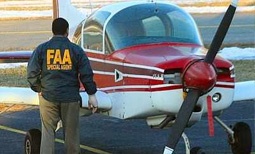
The Federal Aviation Administration (FAA) operating out of Orville Wright Federal Building, 800 Independence Avenue SW, Washington, D.C., 20591 , (866) 835-5322, is a U.S. government agency under the Department of Transportation, responsible for regulating all aspects of civil aviation. It oversees air traffic control, aircraft certification, pilot licensing, airport development, and the safe integration of commercial space and unmanned aircraft. Founded in 1958, the FAA ensures aviation safety, enforces regulations, promotes efficiency, and supports advancements in aerospace systems and technologies throughout the National Airspace System. |
|
| FADEC (Full Authority Digital Engine Control) | FADEC is an advanced electronic system that automatically controls an aircraft's engine functions, optimizing fuel efficiency and performance. It eliminates the need for manual throttle adjustments by pilots, ensuring precise control over thrust, reducing pilot workload, and improving engine reliability while preventing operating conditions outside safe performance limits. |  |
| False Horizon | A visual illusion where a misleading reference point, such as clouds or terrain, causes a pilot to misinterpret the actual horizon. This can lead to spatial disorientation, especially at night or in poor visibility. Pilots rely on attitude indicators and flight instruments to counteract false horizon illusions. | 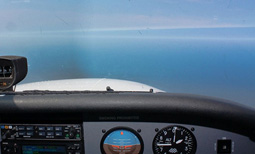 |
| Fan Blade | A key component of a turbofan engine, fan blades draw in and compress air to generate thrust. Modern fan blades are made from lightweight composite materials to maximize efficiency, reduce noise, and improve fuel consumption. Their design significantly impacts an engine's performance and durability. | 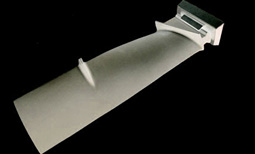 |
| FAR (Federal Aviation Regulations) | A set of rules established by the Federal Aviation Administration (FAA) governing all aspects of civil aviation in the U.S. These regulations cover aircraft certification, flight operations, pilot licensing, air traffic management, and maintenance requirements, ensuring safe and standardized aviation practices. |  |
| Fatigue (Aircraft Structure) | A weakening of aircraft materials due to repetitive stress cycles over time. Structural fatigue can lead to cracks and potential failures, necessitating regular inspections and maintenance to detect early signs of wear. Aircraft manufacturers design components with fatigue resistance to extend operational lifespan. | 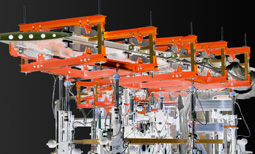 |
| Feathering (Propeller) | A procedure in which a propeller's blades are adjusted to a high angle to minimize drag in case of engine failure. This is commonly used in multi-engine aircraft to reduce resistance and allow continued flight using the remaining operational engine(s). | 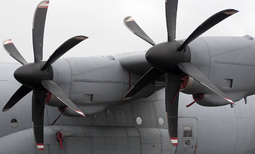 |
| >Ferry Flight | A non-revenue flight conducted to relocate an aircraft for maintenance, delivery, or repositioning purposes. It may operate with reduced crew and minimal fuel, depending on its purpose. Ferry flights do not carry passengers unless specifically authorized. | 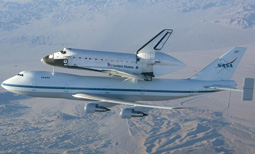 |
| Final Approach | The last segment of an aircraft’s approach before landing, extending from the final approach fix to the runway threshold. Pilots align with the centerline and descend according to glide path indications, ensuring a smooth and controlled touchdown. | 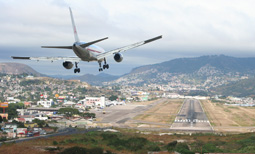 |
| Fire Detection System | A safety system installed in aircraft to detect and alert pilots of potential fires in the engine, cargo compartments, or cabin. It consists of sensors, alarms, and extinguishing mechanisms to mitigate fire risks and enhance passenger safety. |  |
| Firewall | A heat-resistant barrier between an aircraft’s engine compartment and cockpit or fuselage. It protects occupants from engine fires by containing flames and preventing heat transfer. Firewalls are made of specialized materials designed to withstand extreme temperatures. | 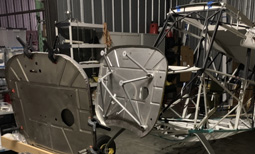 |
| Flameout | A condition where an aircraft engine unexpectedly shuts down due to fuel starvation, compressor stall, or severe weather. Pilots are trained in restart procedures, but some flameouts may require an emergency landing if engine relight is unsuccessful. |  |
| Flaps | Hinged surfaces on an aircraft’s wings that extend downward to increase lift and drag during takeoff and landing. Flaps allow for slower approach speeds, shorter landing distances, and improved low-speed handling. |  |
| Flight Control System | A collection of mechanical and electronic components that allow pilots to maneuver an aircraft. These include ailerons, rudders, and elevators, which control roll, yaw, and pitch. | 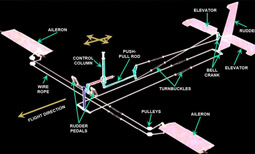 |
| Flight Data Recorder (FDR) | Also known as the "black box," the FDR records crucial flight parameters such as altitude, speed, heading, and engine performance. It is used in accident investigations to determine causes and improve aviation safety. | 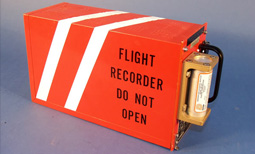 |
| Flight Envelope | The operational limits of an aircraft, including maximum speed, altitude, and maneuverability. Exceeding the flight envelope can lead to structural damage, loss of control, or aerodynamic stall. | 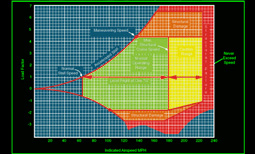 |
| Flight Level (FL) | A standard altitude reference in aviation, expressed in hundreds of feet. For example, FL350 represents 35,000 feet above mean sea level. Flight levels simplify communication and air traffic control coordination, particularly in high-altitude operations. | 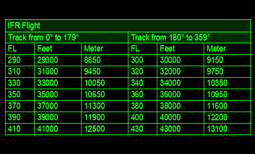 |
| Flight Management System (FMS) | A computerized system that automates navigation, flight planning, and performance management. FMS reduces pilot workload by integrating GPS, autopilot, and onboard sensors, optimizing fuel efficiency and route planning. | 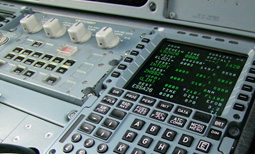 |
| Flight Path | The actual trajectory an aircraft follows during flight, which may differ from the planned route due to weather, air traffic control instructions, or turbulence. Maintaining a stable flight path is essential for safety. | 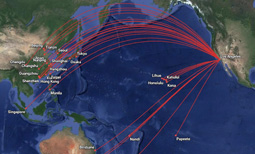 |
| Flight Plan | A detailed document submitted to air traffic control outlining an aircraft’s intended route, altitude, estimated time of arrival, and fuel requirements. Flight plans enhance safety and coordination within controlled airspace. | 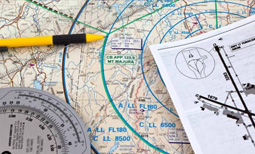 |
| Flight Time | The total duration from an aircraft’s takeoff to landing. Flight time is used for pilot logbooks, aircraft maintenance tracking, and regulatory compliance with duty-hour limits. | 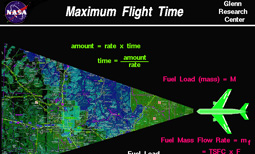 |
| Flight Visibility | The distance at which a pilot can clearly see and identify objects outside the cockpit. Flight visibility is affected by weather conditions, haze, and atmospheric factors, impacting approach and landing decisions. | 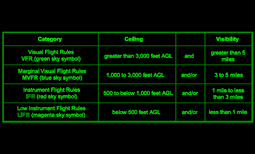 |
| Floatplane | An aircraft equipped with pontoons or floats instead of wheels, allowing it to take off and land on water. Floatplanes are commonly used for remote access, tourism, and seaplane operations. | 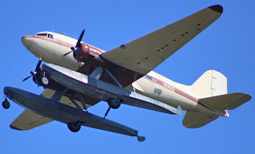 |
| Fly-by-Wire (FBW) | A digital flight control system that replaces mechanical linkages with electronic signals. FBW systems enhance maneuverability, safety, and automation by processing pilot inputs through computers that adjust flight surfaces in real-time. | 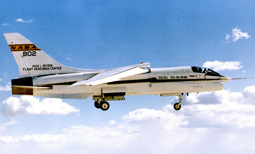 |
| Fog Dispersal | A technique used at airports to clear fog and improve visibility. Methods include using chemicals, heat, or aircraft-generated turbulence to disperse fog and facilitate safer landings. | 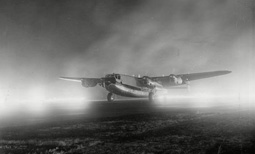 |
| Forced Landing | An emergency landing conducted due to engine failure, structural damage, or fuel exhaustion. Pilots choose the best available landing site to minimize risk and protect passengers. | 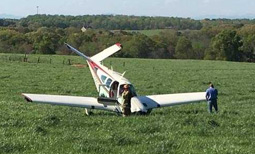 |
| Formation Flight | Multiple aircraft flying in a coordinated arrangement, often used in military operations, airshows, or training. Formation flight requires precise control and communication between pilots. | 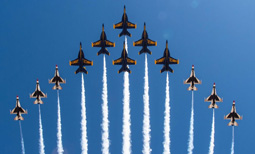 |
| Fuel Dumping | The controlled release of fuel to reduce an aircraft’s weight before landing, typically used during emergency landings when an aircraft exceeds maximum landing weight. |  |
| Fuel Efficiency | A measure of how effectively an aircraft uses fuel to generate thrust. Fuel efficiency is influenced by aircraft design, altitude, speed, and weight management. | 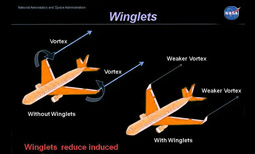 |
| Fuel Jettison System | A system that allows pilots to quickly release fuel in emergencies to reduce landing weight and improve aircraft maneuverability. | 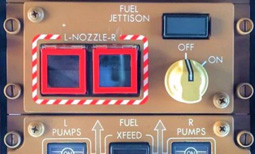 |
| Fuselage | The main body of an aircraft that houses the cockpit, passengers, and cargo. The fuselage connects the wings and tail, providing structural integrity. | 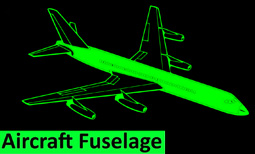 |
